XTPL sells UPD module to Japanese client for advanced PCB and chip packaging

Hardware
Originally reported by 3DPrint.com
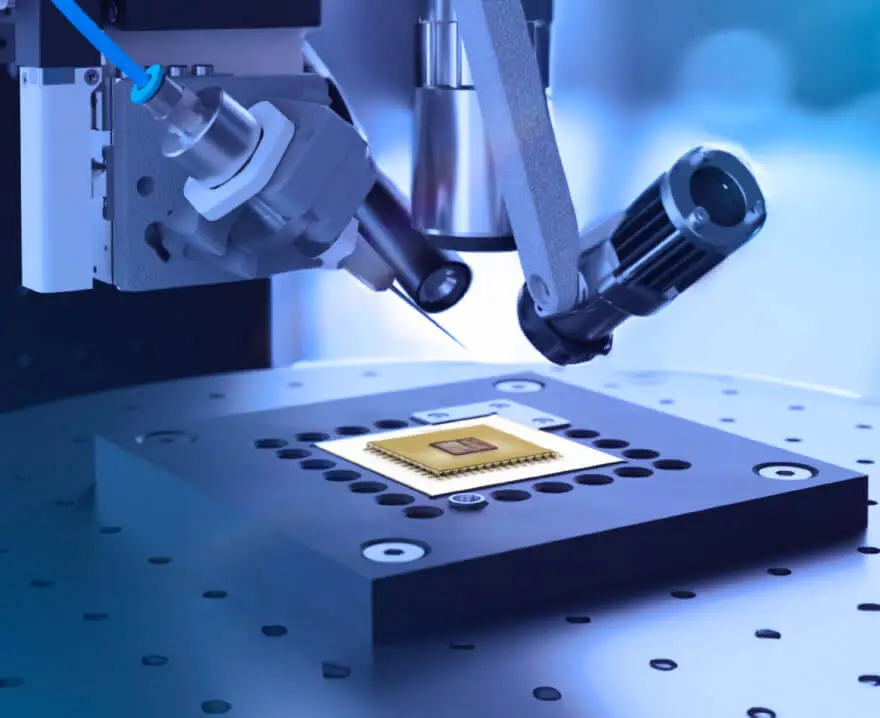
Polish OEM XTPL has announced its first sale into the Japanese market, delivering an Ultra Precise Dispensing (UPD) module to an undisclosed, publicly-listed advanced automated industrial equipment manufacturer. The module, valued at approximately twice the unit price of XTPL's earlier deployment in China, will be delivered in Q4 2026 for integration into a prototyping machine aimed at industrial-scale validation. This marks XTPL's first commercial deployment of copper-based materials, the most critical material category for advanced semiconductor packaging, and follows earlier sales in Taiwan and Silicon Valley.
The significance of this sale lies in its position within the semiconductor sector's R&D cycle. The global semiconductor industry spends an estimated $150-200 billion annually on R&D, roughly nine times the size of the entire additive manufacturing industry. XTPL's UPD technology targets the advanced packaging and printed circuit board (PCB) segments, which are currently the largest drivers of that R&D spend. The company now has six active projects at the fourth stage of evaluation-testing on a prototype industrial machine-with the Japanese project entering at the most advanced specification level. This mirrors a pattern seen in other high-qualification verticals like aerospace and medical: the path from prototyping to production scale is embedded in the business strategy, not a binary switch.
From an expert perspective, XTPL's Japanese entry is a concrete validation that its UPD technology is moving from R&D curiosity toward production readiness in a high-value, high-volume market. The company's ability to secure a customer at the most advanced evaluation stage, with a specification that commands a higher module value, suggests the technology is closing the gap between lab demonstration and factory-floor reliability. The immediate focus for XTPL is executing the Q4 2026 delivery and converting the remaining five projects from prototype testing to industrial deployment. For the broader AM industry, this reinforces that the semiconductor packaging opportunity is real, not speculative, and that process-specific solutions like ultra-precise dispensing are finding their way into the most demanding production environments.
This article is an AI-assisted rewrite of the linked source report. Facts originate from the source; phrasing is AMPulse's. Use Read Original below to verify, or Report an issue if something is wrong.