AON3D brings Hylo high-temperature printer and Basis simulation software to COMPUTEX 2026

Hardware
Originally reported by digitimes.com
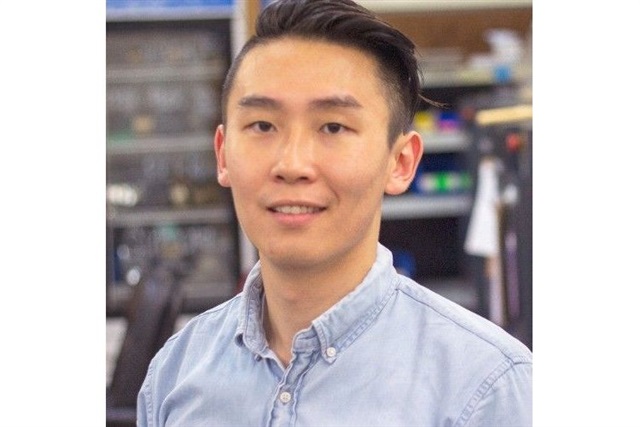
Montreal-based AON3D is showcasing its Hylo High-Temperature 3D Printer and Basis physics simulation software at COMPUTEX 2026, targeting Taiwan's semiconductor packaging, drone, and medical prosthesis sectors. Co-founder and Chief Product Officer Kevin Han, a materials engineering graduate from McGill University, started the company in his family's basement in 2015 alongside Andrew Walker and Randeep Singh. AON3D's open-materials platform supports industrial polymers including PEEK, PEKK, and PEI (Ultem), along with their carbon and glass-fiber variants, and has been used by Boeing, Lockheed Martin, Northrop Grumman, and the Canadian Space Agency for components on the International Space Station and the Artemis 1 mission.
This move matters because AON3D is executing a well-established play in polymer AM: the open-materials strategy that directly challenges the proprietary filament lock-in model used by major competitors. By decoupling hardware from materials supply, AON3D positions itself as the flexible alternative for customers who need high-performance thermoplastics without being tied to a single vendor's consumables. The company's Basis software, which creates a digital twin of the print job and compares simulated data with real-time sensor feedback for automatic optimization, addresses the persistent trial-and-error problem in FDM/FFF processing of high-temperature polymers. AON3D's aerospace credentials - including CSA and NASA program work - demonstrate that its technology has passed qualification scrutiny, but the real commercial opportunity lies in bringing those capabilities to mid-tier manufacturers and SMEs in Taiwan's drone and medical device supply chains, where lightweighting and rapid iteration are critical.
For AON3D, the practical challenge is converting COMPUTEX visibility into sustained channel partnerships and service-bureau relationships in Asia, where local support and material availability often determine adoption. The company's claim of a two-month payback for one automotive customer is a concrete metric worth validating, as it speaks directly to the ROI argument that drives purchasing decisions in industrial tooling and low-volume production. AON3D must now demonstrate that its open-materials model can scale beyond early adopters and deliver consistent process reliability across the full range of high-performance polymers it supports.
This article is an AI-assisted rewrite of the linked source report. Facts originate from the source; phrasing is AMPulse's. Use Read Original below to verify, or Report an issue if something is wrong.