XieTong GaoKe Achieves Multi-Scenario Continuous Fiber 3D Printing with 1,300 MPa Tensile Strength Parts
Originally reported by 南极熊3D打印网
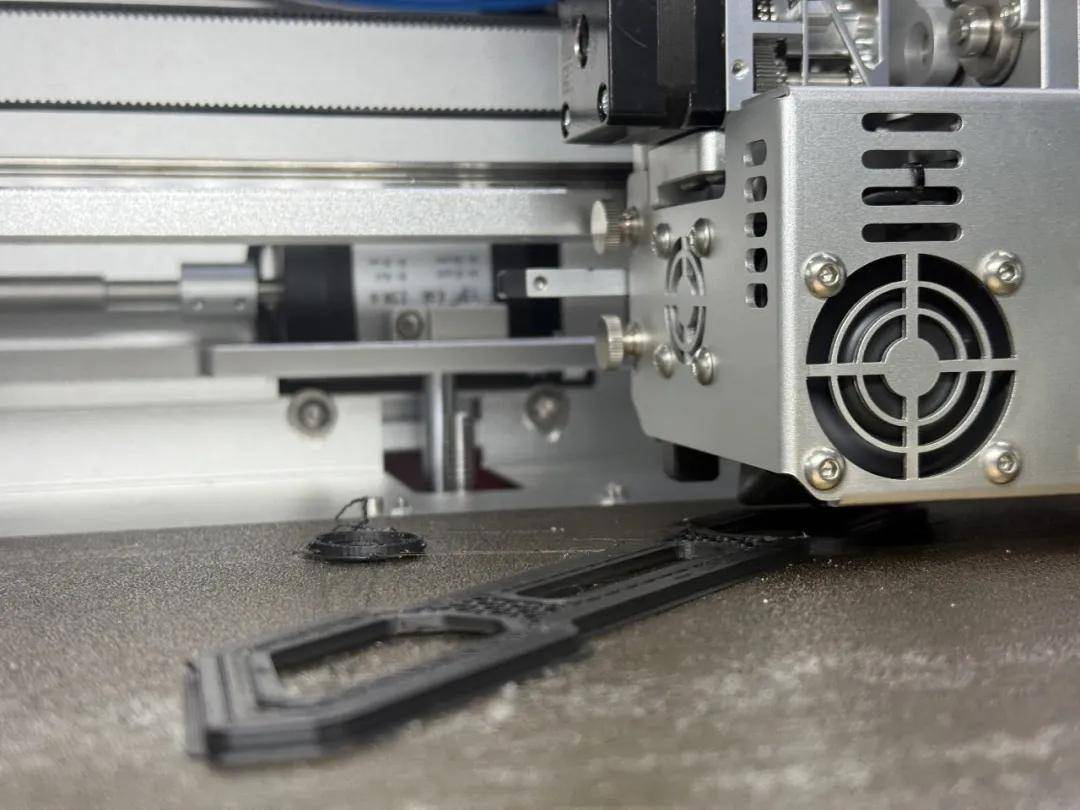
XieTong GaoKe (协同高科), a spin-off from Xi'an Jiaotong University's State Key Laboratory for Manufacturing Systems Engineering, has commercialized continuous fiber 3D printing across aerospace, robotics, and petrochemical applications. The company's F600 printer and proprietary prepreg filament system achieve resin printing speeds of 6,000–10,000 mm/min and continuous fiber speeds above 1,200 mm/min, with printed parts reaching tensile strengths of 1,300 MPa and flexural strength of 700 MPa — significantly exceeding typical FDM/FFF parts (≈100 MPa) and rivaling aluminum alloys. Material systems include CCF/PEEK, CCF/PA, CCF/PC, and CBF/PA, with continuous carbon, aramid, glass, and basalt fiber options, enabling service temperatures above 200°C. Key deployments include curved grid structures for an Aviation Industry Corporation of China subsidiary, space in-situ manufacturing with China Aerospace Science and Technology Corporation, and drone wing production for a listed carbon fiber company, plus robot foot components and corrosion-resistant gears for a chemical industry leader.
This development represents a significant step in China's localization of continuous fiber AM, a segment historically dominated by Western players like Markforged (now part of Nano Dimension) and Anisoprint. XieTong GaoKe's technology addresses the core challenge of fiber-matrix interface bonding and path planning for complex geometries, achieving fiber volume fractions of 55–65% with controlled resin impregnation. The company's full-stack approach — covering printer hardware, prepreg materials, proprietary slicing software, and process recipes — mirrors the vertical integration strategy that has proven effective in metal AM (e.g., BLT in China). The aerospace applications are particularly notable given the sector's high qualification burden; the space in-situ manufacturing program with CASC suggests the technology is being evaluated for mission-critical roles, not just prototyping. The robot foot component, achieving 50–67% weight reduction versus aluminum with 3–5x strength improvement, demonstrates the lightweighting value proposition that drives adoption in high-performance segments.
From an industry perspective, XieTong GaoKe's progress validates that continuous fiber AM can move beyond demonstration parts into production-grade applications, but the company must now demonstrate repeatability across larger fleets and longer service intervals. The petrochemical gear application — running for six months in a chemical plant — is a practical proof point that matters more than lab specs. The key execution risk is scaling material consistency and machine reliability to match the aerospace qualification timelines, which typically run 3–5 years for structural parts. For buyers evaluating continuous fiber AM, the 1,300 MPa tensile strength and PEEK compatibility are genuine differentiators, but the real test will be whether XieTong GaoKe can build the service and support infrastructure to match its technology capabilities.
This article is an AI-assisted rewrite of the linked source report. Facts originate from the source; phrasing is AMPulse's. Use Read Original below to verify, or Report an issue if something is wrong.
Topics