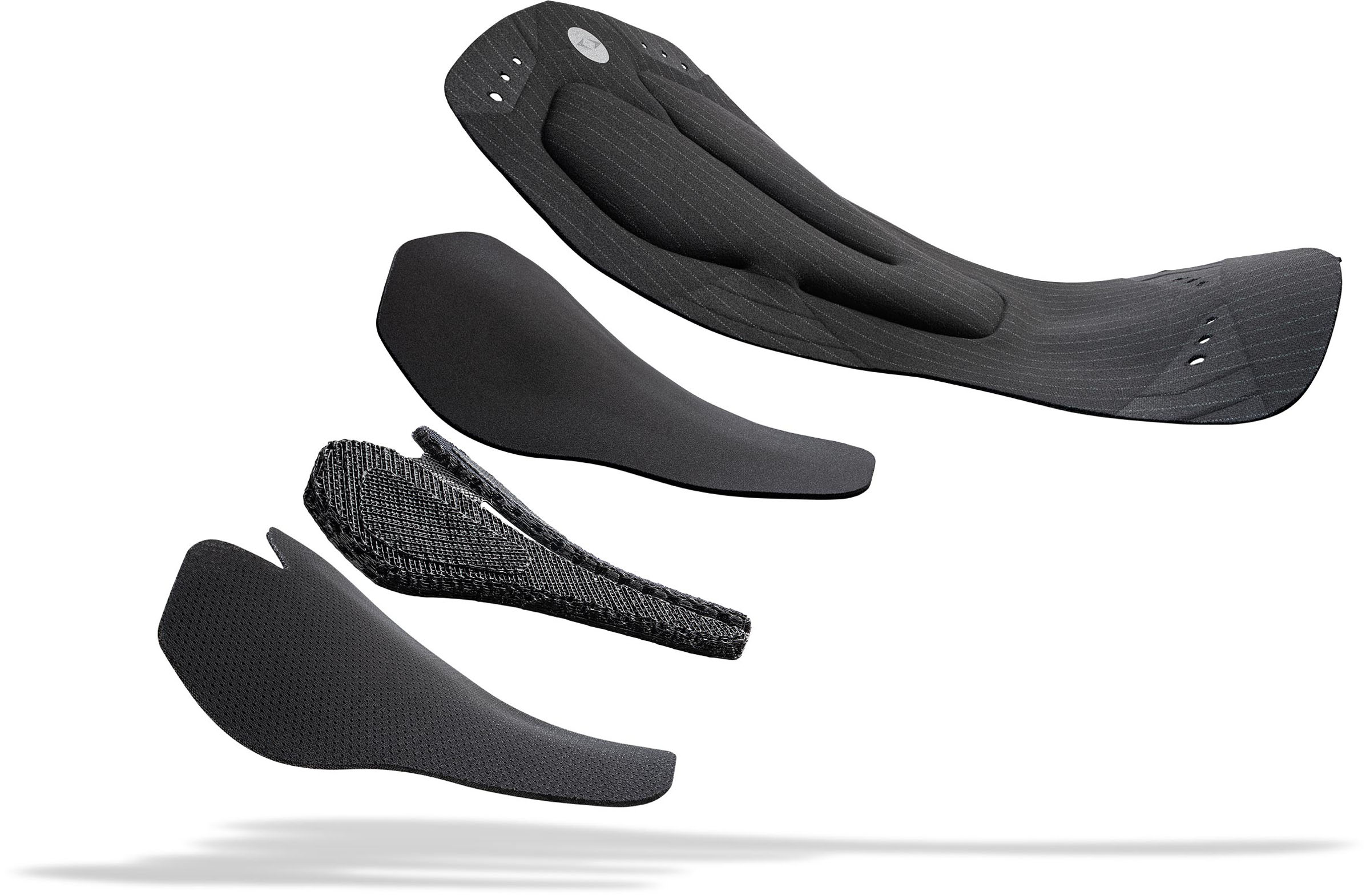
Elastic Interface launches foam-free 3D printed cycling pad AURA N3X FL

Hardware
Originally reported by 3D Printing Industry
Italian cycling apparel specialist Elastic Interface has launched the AURA N3X FL, its first production cycling shorts pad constructed entirely without polyurethane foam or laminated layers. Unveiled at Performance Days in Munich in March 2026, the pad replaces conventional foam with 3D printed lattice structures and technical textiles across the entire construction. The design builds on Elastic Interface’s N3X platform introduced in 2023, which previously used 3D printing in a supporting role. The AURA N3X FL is patent-pending and targets long-distance and high-intensity riders, where sustained pressure and heat accumulation challenge standard foam-based pads.
This launch moves 3D printing from a pad component to the primary structural element, a shift that changes how cycling pads can be engineered. In conventional foam products, load distribution and elastic response are determined by the material itself; a 3D printed lattice transfers those characteristics into geometry, allowing independent tuning of support, elasticity, and airflow across different zones. Elastic Interface’s approach mirrors similar lattice-for-foam replacements seen in bicycle saddles from Mahdi Naïm Studio and Trek’s AirLoom saddle, but applies the principle to a garment where continuous flexing, moisture management, and direct skin contact introduce different engineering constraints. The pad also incorporates the company’s proprietary Eco AirTech material for breathability and moisture evacuation. The move reflects a broader trend in consumer goods where AM is being used to replace closed-cell foams in comfort and performance applications, though the performance claims remain to be validated in real-world riding conditions.
From an engineering perspective, the AURA N3X FL is a credible step forward in applying lattice design to wearable products, but its commercial impact depends on whether riders perceive a meaningful comfort difference over long distances. Elastic Interface has positioned the pad within the N3X range rather than replacing its existing foam-based lineup, suggesting a cautious rollout. The company needs to demonstrate that the geometric precision of 3D printing translates into measurable performance gains-lower heat buildup, better pressure distribution-that justify the likely higher unit cost versus conventional foam pads. For buyers and OEM cycling brands, this is a product to test, not a category to bet on yet.
Topics