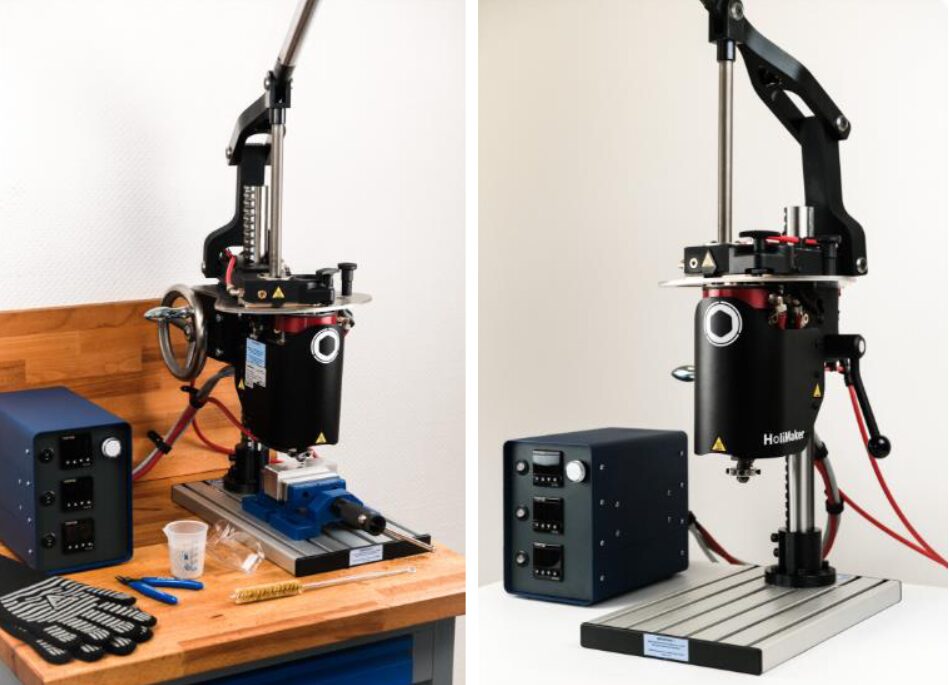
HoliMaker launches HoliPress High Temp manual injection press for engineering thermoplastics with 3D-printed resin molds

Post-Processing
Originally reported by 3Druck
French manufacturer HoliMaker has introduced the HoliPress High Temp, a compact manual injection molding press designed for processing engineering thermoplastics at temperatures up to 500°C. The system features multiple heating zones, a high-temperature nozzle with active liquid cooling, and is CE-certified and patented. According to founder Aurélien Stoky, the press enables the "freedom to fail" by allowing users to pair additively manufactured resin molds with real production-grade thermoplastics for rapid material and geometry testing, bypassing the need for industrial injection molding machines or external tooling.
This product addresses a persistent gap in the prototyping-to-production workflow: designers can now evaluate not just the shape of a prototype but also its mechanical and thermal properties in the actual series material. The combination of 3D-printed resin molds with high-temperature injection molding sits at the intersection of rapid tooling and materials discipline, a segment that remains under-served by both traditional AM service bureaus and conventional injection molding shops. While manual presses like the Babyplast exist, HoliMaker's explicit coupling with AM-produced molds-and its emphasis on bridging early-stage development-targets R&D labs, university workshops, and small-series producers who need faster material qualification without committing to hard tooling.
The HoliPress High Temp is a focused tool, not a production system. Its value lies in compressing the iteration cycle for engineering thermoplastic parts, particularly for applications where material properties are as critical as geometry. Users should assess whether their current prototyping process suffers from material mismatch-if so, this press could reduce downstream rework. HoliMaker’s next step is to demonstrate reliable mold life and repeatability across multiple cycles, which will determine whether this approach moves beyond lab use into low-volume production.
Topics