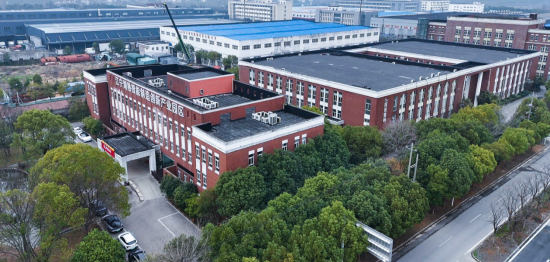
Huirui Group CEO Qi Huan details integration into aircraft engine lifecycle via DED repair at aviation maintenance base

Hardware
Originally reported by 新浪财经
Huirui Group, a Chinese metal additive manufacturing company specializing in laser cladding and directed energy deposition (DED), has detailed its deep integration into the aircraft engine and gas turbine lifecycle. In an interview published June 29, 2026, CEO Qi Huan described how the company's earliest engineering breakthrough came around 2013 through a collaboration with an undisclosed aviation maintenance base, focusing on critical engine blade repair. The company spent 2014 to 2017 embedded at the customer's factory, developing equipment and validating processes in a real production environment. Huirui now positions itself as a full-solution provider covering laser cladding equipment, metal AM systems, robotic multi-axis systems, process control software, and a proprietary materials database, with annual revenue growth exceeding 50% in recent years and cumulative financing reaching the hundred-million-yuan scale.
This story fits the Chinese localization arc pattern, where a Western pioneer establishes a category and a Chinese entrant localizes the supply chain, scales faster, and integrates into domestic industrial ecosystems. Huirui's focus on DED and laser cladding for high-value component repair addresses a persistent industrial problem: expensive parts that are difficult and costly to replace. By shifting the paradigm from full replacement to localized repair, the company targets the "two engines" sector - aircraft engines and gas turbines - where long-term maintenance demand is structural and some key processes remain under import restrictions. The company's emphasis on building a materials and process database through extensive testing, rather than just selling machines, reflects a service-based adoption approach that is harder to replicate than hardware alone.
From an expert perspective, Huirui's trajectory demonstrates that the real barrier in industrial AM is not the printer but the qualification ecosystem around it. The company's decade-long embedded development with a single customer base is the kind of grind that builds defensible process knowledge. For competitors, the lesson is that winning in aerospace maintenance requires patient capital and a willingness to become invisible infrastructure, not just a hardware vendor. The next test will be whether Huirui can translate its domestic maintenance base success into broader commercial aviation certification, where OEM-controlled supply chains remain a formidable gate.
Topics