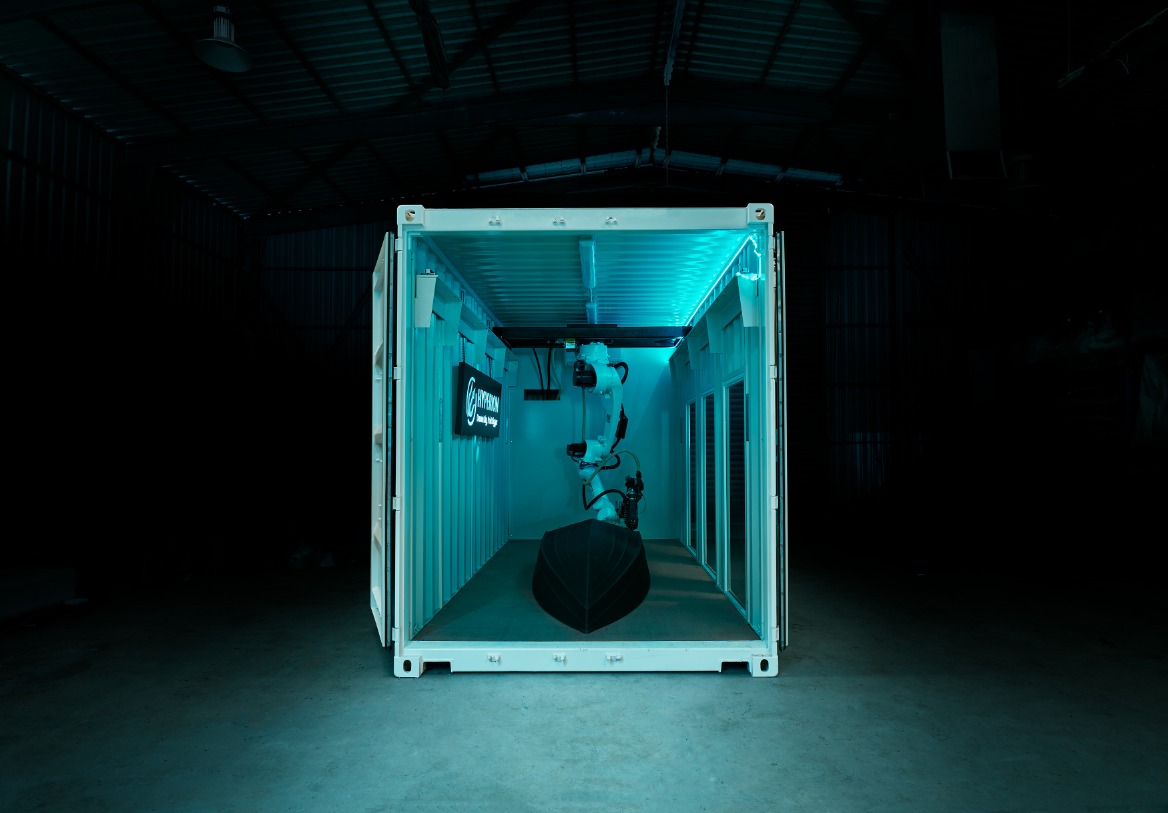
Hyperion Systems unveils ASTRA 460, southern hemisphere's first 3D-printed USV, in Western Australia

Hardware
Originally reported by Australian Manufacturing
Australian company Hyperion Systems unveiled the ASTRA 460, a 4.6-metre uncrewed surface vessel (USV), at the Indian Ocean Defence and Security Conference in Western Australia. The hull is manufactured using large-format additive manufacturing (LFAM) with recycled polymer material, printed in approximately 40 hours versus four to six weeks for conventional boatbuilding. The vessel integrates autonomy from Greenroom Robotics (GAMA platform) and is designed for surveillance, security and defence missions, with a top speed of 40 knots and 200 km range. A larger 8-metre prototype is planned for delivery to a European navy for participation in a naval exercise later in 2026.
This deployment of LFAM into maritime defence represents an incremental but notable expansion of additive manufacturing's role in sovereign capability. While metal PBF-LB dominates aerospace and medical, large-format polymer extrusion addresses a different cost-speed niche - trading higher material strength for rapid, distributed production of unmanned platforms. The project fits the defence vertical's politically accelerated adoption pattern, with sovereign manufacturing resilience as an explicit driver. The TitanCell mobile factory concept further emphasizes field-deployable production, a recurring theme in recent defence-funded AM projects. However, the economic case hinges on sustained sea trial performance and qualification of recycled polymer for marine environments, not just print speed.
For Hyperion, the immediate next step is successful sea trials and validation of the ASTRA 460's hull integrity under operational loads. The 8-metre prototype order from a European navy is a stronger signal of real procurement intent than the initial demo. If the platform meets its claimed 40-knot performance and modular payload flexibility, it could open a narrow but viable production run for coastal defence forces seeking low-cost, rapidly deployable USVs. The $385,000 grant is modest; scaling from one-off to repeatable production will require further investment and supply chain maturity for recycled polymer feedstock.
This article is an AI-assisted rewrite of the linked source report. Facts originate from the source; phrasing is AMPulse's. Use Read Original below to verify, or Report an issue if something is wrong.
Topics