IBM files patent for AI-driven active control of 3D printers during printing
Originally reported by 3Druck
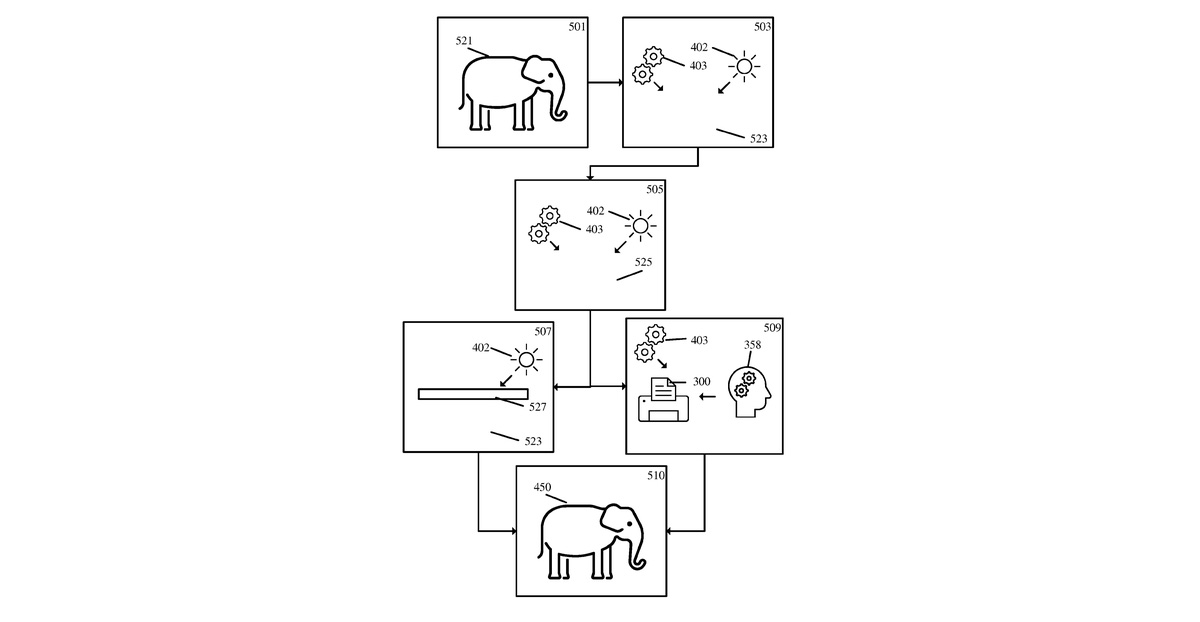
IBM has published a patent application (US 2026/0177993 A1) describing an artificial intelligence system designed to actively control 3D printers during the build process. Filed on December 23, 2024, and published on June 25, 2026, the patent outlines a method where sensor data from both inside and outside the printer is fed into a machine learning model - including neural networks, random forests, LSTM models, and reinforcement learning - to predict and compensate for environmental disturbances such as airflow, humidity, and temperature. The system would then issue real-time commands to adjust nozzle speed, layer height, material temperature, or even pause or abort the print. A novel element involves depositing a temporary protective barrier around the part to shield it from external influences. IBM explicitly targets open-environment printing scenarios, such as large-format or construction applications, where printers lack a sealed, climate-controlled chamber.
This patent represents a conceptual leap beyond the current state of AI in desktop and industrial polymer AM. Today, embedded AI from Bambu Lab, Creality, and Anycubic focuses on passive error detection - spotting spaghetti failures or first-layer adhesion problems - rather than active, predictive process control. IBM's approach would shift the AI from a monitoring role to a closed-loop controller, addressing a fundamental reliability gap in polymer material extrusion (FDM/FFF) and potentially large-format systems. The practical barrier is significant: most commercial printers do not expose deep control interfaces during a build, meaning IBM's concept would require either open-architecture machines or licensing agreements with OEMs. The patent also raises the question of liability - if an AI modifies a print mid-build, who owns the resulting part quality? IBM, as a software and services company, is positioning itself as a layer above hardware, not a printer OEM, which aligns with its broader strategy of embedding AI into industrial workflows.
For the AM industry, this patent is a signal that the convergence of AI and process control is moving from academic research toward commercial IP. The key execution challenge for IBM will be securing access to printer control stacks, which are often proprietary and closed. If IBM can partner with an open-platform manufacturer or a large-format construction printer maker, the concept could move from patent to prototype. For now, the filing is a stake in the ground - a recognition that the next frontier in AM reliability is not better hardware alone, but intelligent, adaptive software that can handle the messy reality of uncontrolled environments.
Topics