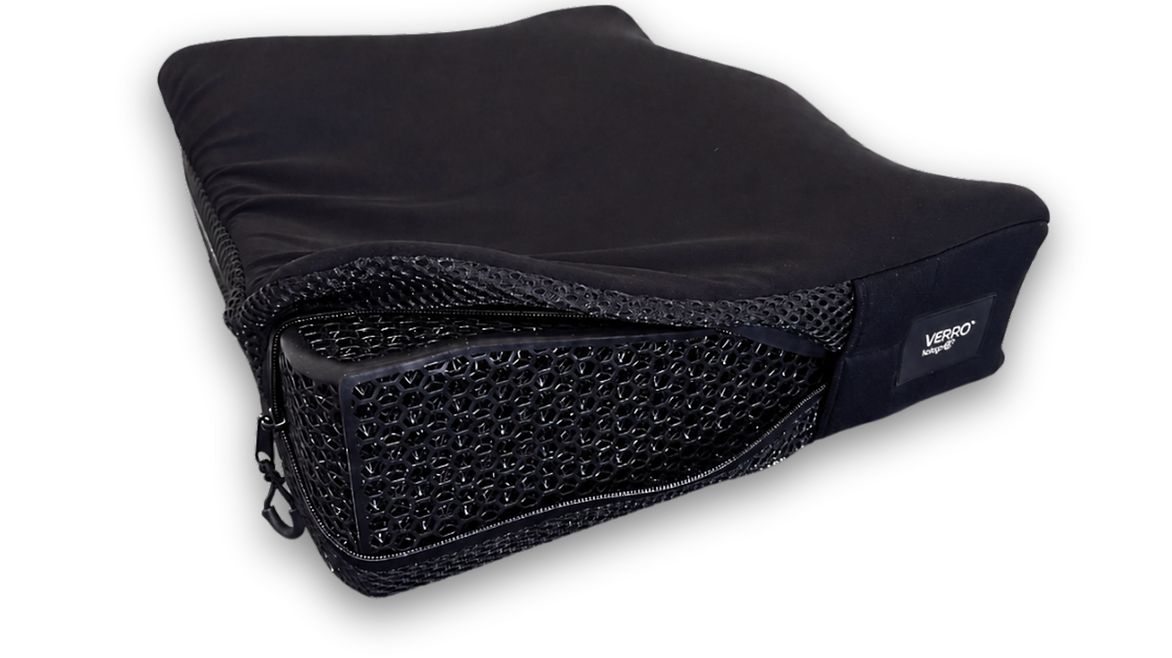
Kalogon Seeks Patent on 3D-Printed Verro Variable-Density Wheelchair Cushion, Already Medicare-Coded

Hardware
Originally reported by 3DPrint.com
Kalogon has launched Verro, a 3D-printed wheelchair cushion made via vat polymerization, in two versions: a variable-density lattice model and a dual-density foam model. Both are Medicare coded (E2609). The company, which also builds seating for US military aircraft, is pursuing a patent on the variable-density lattice design, which CEO Tim Balz says gives clinicians precise, localized control over support and pressure relief. Buyers configure the cushion online from a 3D scan or manual measurements, with delivery in about two weeks and a dishwasher-safe cover.
The patent filing lands in a market where variable-density, 3D-printed elastomeric wheelchair cushions are already established rather than novel. Glide's FX3D, Etac's lattice cushions, Carbon's elastomeric lattice work, and Scottish firm LCS's 2025 launch all use comparable vat polymerization-class geometry to vary firmness across a cushion surface. That prior art raises the question of how narrow Kalogon's claims will end up: a patent tied to a specific lattice geometry or manufacturing detail is defensible, while a broad claim over variable-density lattice cushioning generally would run into a crowded field of existing products and published research.
Regardless of patent scope, the Medicare E2609 coding is the more immediate commercial lever, since reimbursement classification determines clinical accessibility faster than IP breadth does in complex rehab seating.
This article is an AI-assisted rewrite of the linked source report. Facts originate from the source; phrasing is AMPulse's. Use Read Original below to verify, or Report an issue if something is wrong.
Topics