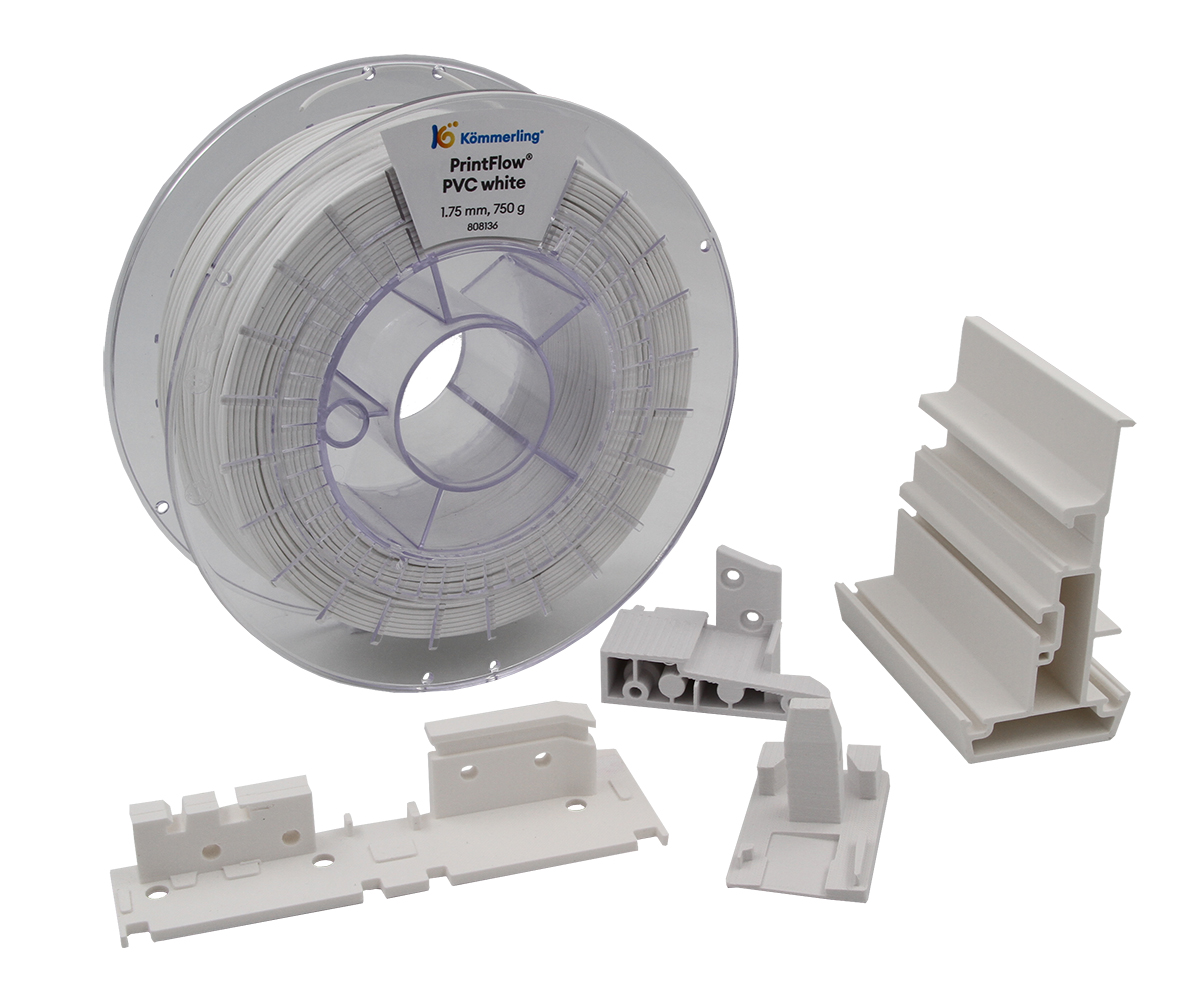
Kömmerling PrintFlow launches PVC filament for FFF printers targeting industrial and consumer use

Materials
Originally reported by 3Druck
The profine Group, through its Kömmerling PrintFlow brand, has introduced a technical PVC filament for FDM and FFF 3D printers. Initially available in white, with black-anthracite and gray variants in development, the material is designed for components requiring increased durability. Kömmerling PrintFlow targets both industrial users and private consumers, emphasizing weather resistance, low moisture absorption, and resistance to UV radiation and abrasion. The company describes the filament as quality-stable and suitable for repeatable manufacturing processes, including small series, spare parts, and functional prototypes.
This launch expands the material palette for polymer material extrusion, a segment where PVC has been uncommon compared to PLA, PETG, or ABS. The introduction of a patented PVC filament addresses a gap for applications needing outdoor durability and chemical resistance without the higher cost or processing complexity of engineering thermoplastics like PEEK or PEKK. Potential application areas include construction, electronics, healthcare, packaging, and transportation. The material's recyclability also speaks to growing resource-efficiency demands in additive manufacturing. However, practical adoption will depend on how well the filament processes across different printer systems and the process windows profine defines for temperature control, adhesion, and part quality.
For the FFF market, this is a niche but practical addition. Users seeking weather-resistant parts for outdoor jigs, enclosures, or functional prototypes now have a material option that leverages PVC's established properties. The key execution challenge for Kömmerling PrintFlow will be providing clear, validated print profiles for popular printer platforms to ensure reliable, repeatable results. Buyers should verify compatibility with their specific hardware and hotend temperatures before committing to the material.
Topics