Lithoz CEO confirms next-gen ceramic AM system for 2027, with larger parts and thicker walls

Hardware
Originally reported by TCT Magazine
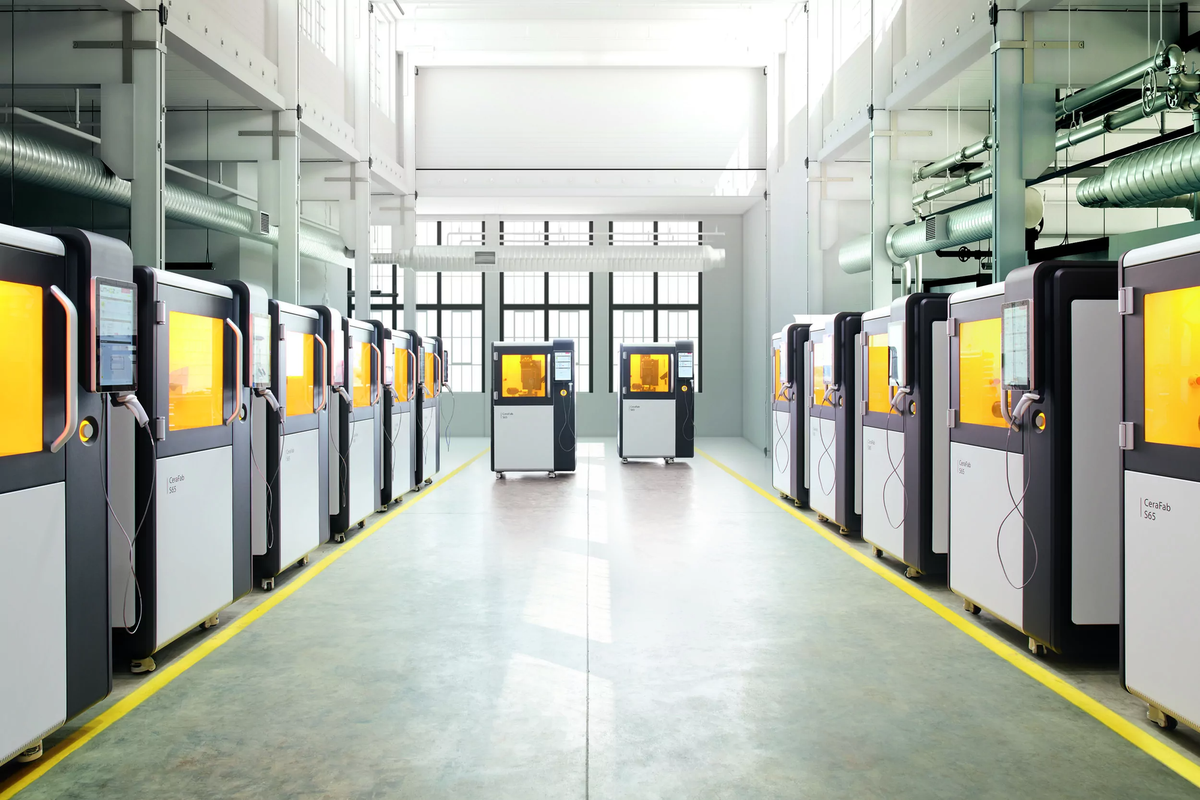
Lithoz CEO Johannes Homa has confirmed that the company is developing a new ceramic 3D printing system, expected to be announced in 2027, capable of producing larger parts with thicker walls than any existing Lithoz machine. Speaking to TCT Magazine, Homa acknowledged that the current flagship CeraFab 320, launched two years ago as Lithoz's largest system, has received a mixed reception: some users value its higher productivity and larger part capability, while existing customers prefer the flexibility and resolution of the smaller S65 system. Homa emphasized that the CeraFab 320 still does not solve all problems, particularly regarding wall thickness limitations for large parts, and that the next machine will address this gap. The company, headquartered in Vienna, Austria, remains the leading supplier of lithography-based ceramic manufacturing (LCM) technology for technical ceramics such as alumina, zirconia, and silicon nitride.
This update matters because it reflects the real-world constraints of ceramic AM adoption, where material properties-especially wall thickness and green-body strength-limit part geometry and scale. Lithoz's candid assessment contrasts with typical industry hype and aligns with the broader pattern of AM maturity: success is measured by solving specific manufacturing problems, not by machine theater. The ceramic AM segment remains small but strategically important for applications in medical implants, dental restorations, electronics substrates, and high-temperature tooling, where metal and polymer alternatives fail. Lithoz's main competitor is Prodways (with its ceramic-capable DLP systems) and emerging Chinese players, but Lithoz's deep materials expertise and closed-loop process control give it a defensible position. The next machine's ability to produce thicker walls without sacrificing resolution will determine whether Lithoz can expand beyond its current niche of small, high-precision parts into larger structural ceramic components.
For the ceramic AM market, this is a measured step forward rather than a breakthrough. Lithoz must execute on the engineering challenge of maintaining dimensional accuracy and density in thicker-walled parts while keeping cycle times practical. Users evaluating ceramic AM should watch for specific build volume, layer thickness, and debinding/sintering shrinkage data when the system is announced-these will determine whether the machine truly opens new applications or merely extends existing capabilities. The 2027 timeline gives Lithoz room to solve the wall-thickness problem without overpromising.
Topics