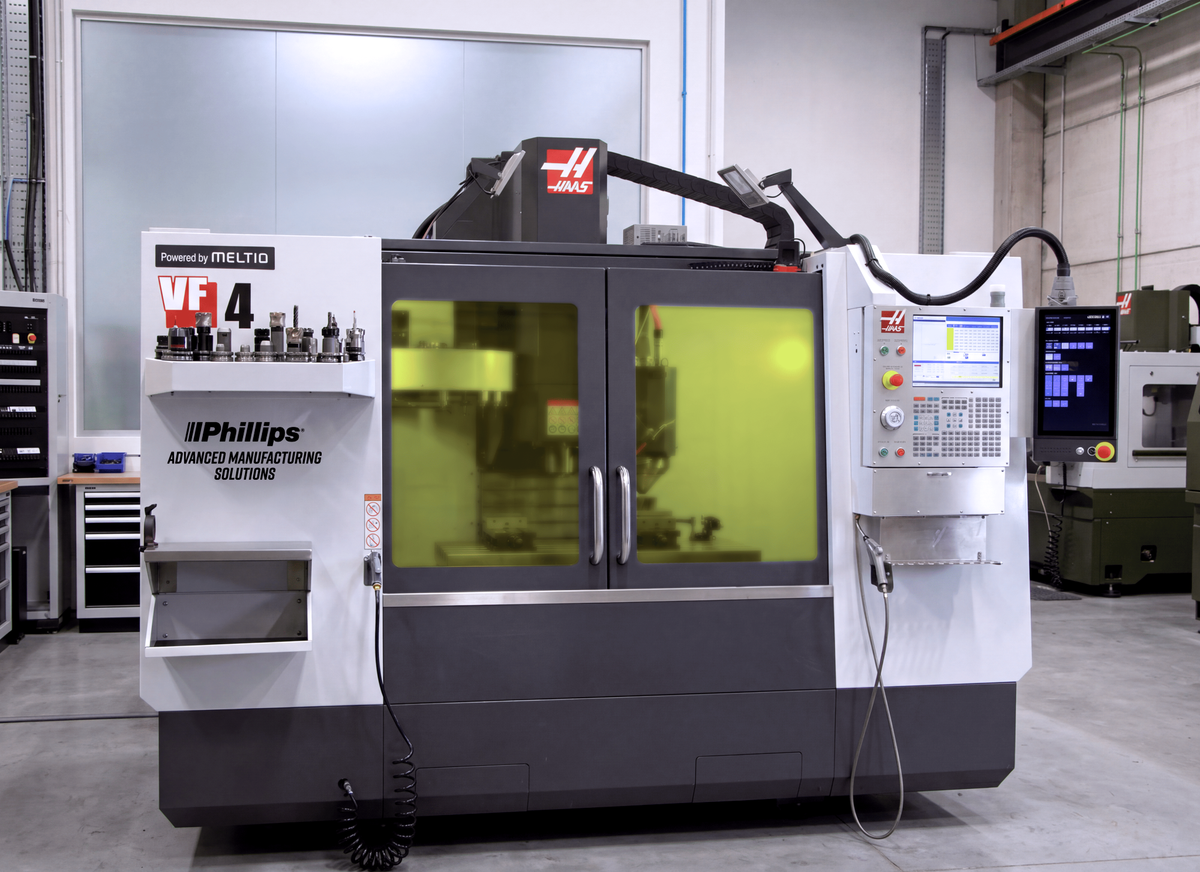
Markforged places 12 X7 systems with US Navy Schoolhouse alongside 12 Phillips hybrid CNC-DED units

Hardware
Originally reported by TCT Magazine
Markforged has installed 12 X7 composite additive manufacturing systems at the US Navy Schoolhouse in Danville, Virginia, paired with 12 Phillips Hybrid Manufacturing systems under a deployment managed with BlueForge Alliance, the Navy's procurement and program management partner. The X7 fleet will give sailors in the Afloat Training Program hands-on practice producing tooling, fixtures, prototypes, and replacement components on production-ready composite workflows. The Phillips units combine a Haas TM-1P CNC with Meltio directed energy deposition (DED), so trainees also learn metal hybrid manufacture of new parts and repair of worn components. Naval Sea Systems Command owns the Schoolhouse, which is operated with the Institute for Advanced Learning and Research.
For Markforged, a 12-unit schoolhouse install is not a one-off demo sale; it embeds continuous-fiber composite material extrusion into Navy workforce doctrine for fleet readiness and sustainment. That sits alongside metal hybrid DED as a dual path for point-of-need production-composites for fast fixtures and non-critical spares, hybrid CNC-DED for metal repair when traditional supply chains cannot respond at sea. The Navy's broader Deployed Advanced Manufacturing program already has a shipboard reference in a replacement sprayer plate produced aboard USS Bataan, which is why training on the same class of systems sailors will meet afloat matters more than marketing machine counts. Phillips Federal, Meltio, Markforged, and BlueForge Alliance are being positioned as a collaborative stack rather than competing silos for contested or remote logistics.
The practical implication is curriculum lock-in: once Danville standardizes on Markforged X7 and Meltio-based hybrid platforms, follow-on shipboard kits and spare-part workflows tend to inherit that stack. Program buyers should treat this as workforce infrastructure under NAVSEA sustainment priorities, where operator skill and process discipline-not delivery of 24 machines-will decide whether expeditionary AM reduces reverse-supply dependence.
This article is an AI-assisted rewrite of the linked source report. Facts originate from the source; phrasing is AMPulse's. Use Read Original below to verify, or Report an issue if something is wrong.
Topics