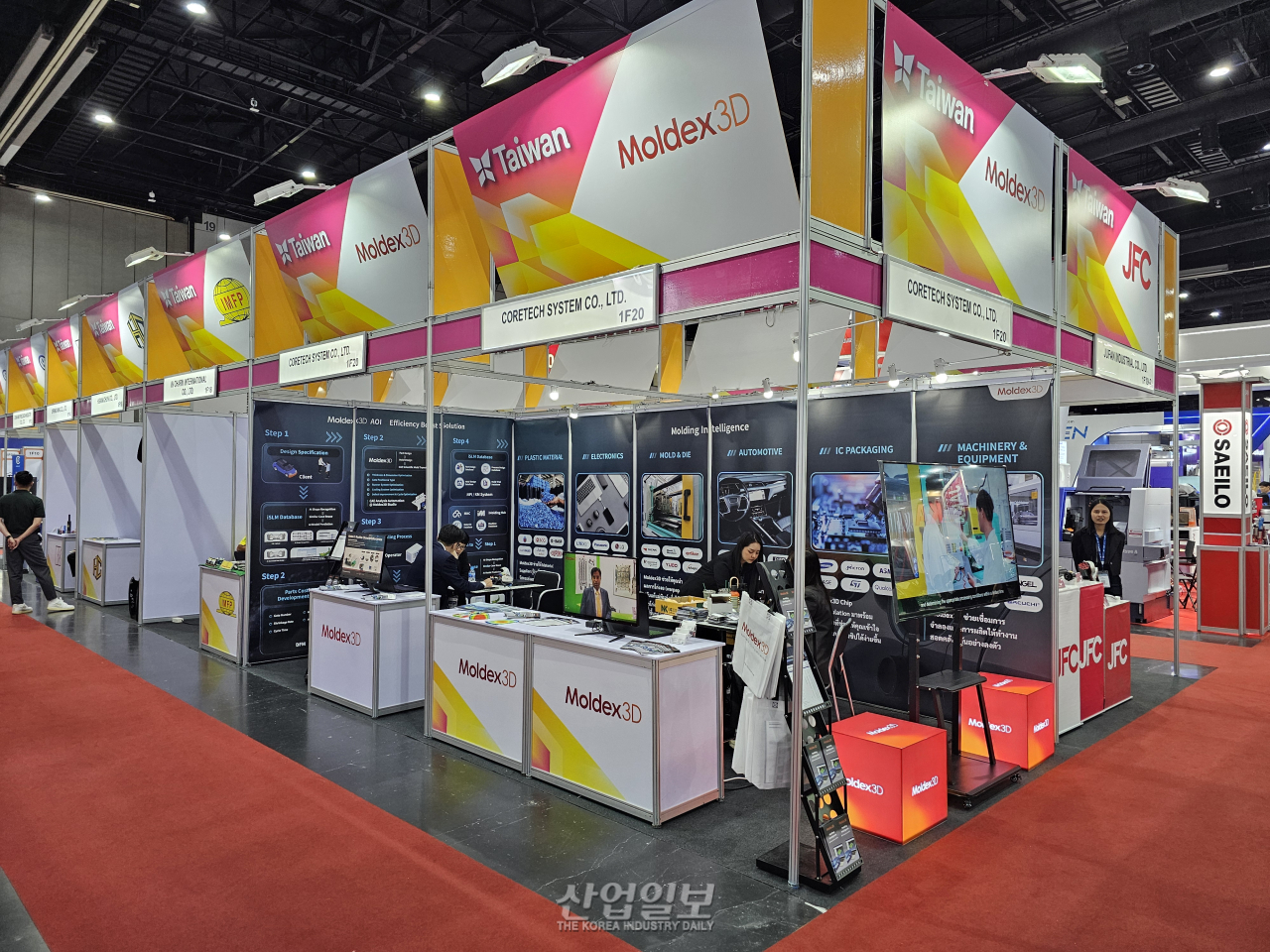
Moldex3D Showcases Injection Molding Simulation for Smart Manufacturing at ME2026 in Bangkok

Software
Originally reported by KIDD
Moldex3D, a specialist in injection molding simulation software, participated in the InterMold Thailand 2026 exhibition held within Manufacturing Expo 2026 at BITEC in Bangkok from June 17 to 20. The company demonstrated its CAE-based simulation technology designed to predict molding defects such as shrinkage, warpage, weld lines, and filling imbalance during the design phase, before physical mold production. Oliver Tsai, Managing Director for Korea and Southeast Asia at Moldex3D, emphasized that simulation tools are becoming critical for reducing trial-and-error and enabling data-driven decision-making in plastic manufacturing.
This event places Moldex3D at the intersection of two converging trends: the digital transformation of traditional manufacturing and the growing complexity of plastic components in Southeast Asia's automotive, electronics, medical device, and consumer goods sectors. While Moldex3D is not an additive manufacturing company, its simulation workflow-linking design, analysis, data management, and production optimization-mirrors the digital engineering discipline that AM software providers like Autodesk (Netfabb), Hexagon (MSC Apex), and Altair (Inspire) also target. The company's focus on pre-production defect prediction and process optimization addresses the same value-chain pain point that AM aims to solve: reducing physical iteration costs. Thailand's role as a regional manufacturing hub, particularly for electric vehicles and precision electronics, makes it a logical proving ground for simulation-led manufacturing strategies.
For Moldex3D, the practical takeaway is that its value proposition rests on execution within existing customer workflows, not on flashy technology demonstrations. The company must continue to demonstrate measurable ROI in cycle time reduction and first-pass yield for molders transitioning from trial-based to simulation-based processes. For the broader manufacturing software market, this is a reminder that digital twin and simulation adoption in conventional processes like injection molding remains a more mature and immediately addressable opportunity than many nascent AM software plays.
This article is an AI-assisted rewrite of the linked source report. Facts originate from the source; phrasing is AMPulse's. Use Read Original below to verify, or Report an issue if something is wrong.
Topics