NASA funds Phase3D to deploy Fringe Inspection in-situ monitoring on EOS M300-4 for space-part qualification

Hardware
Originally reported by 3DPrint.com
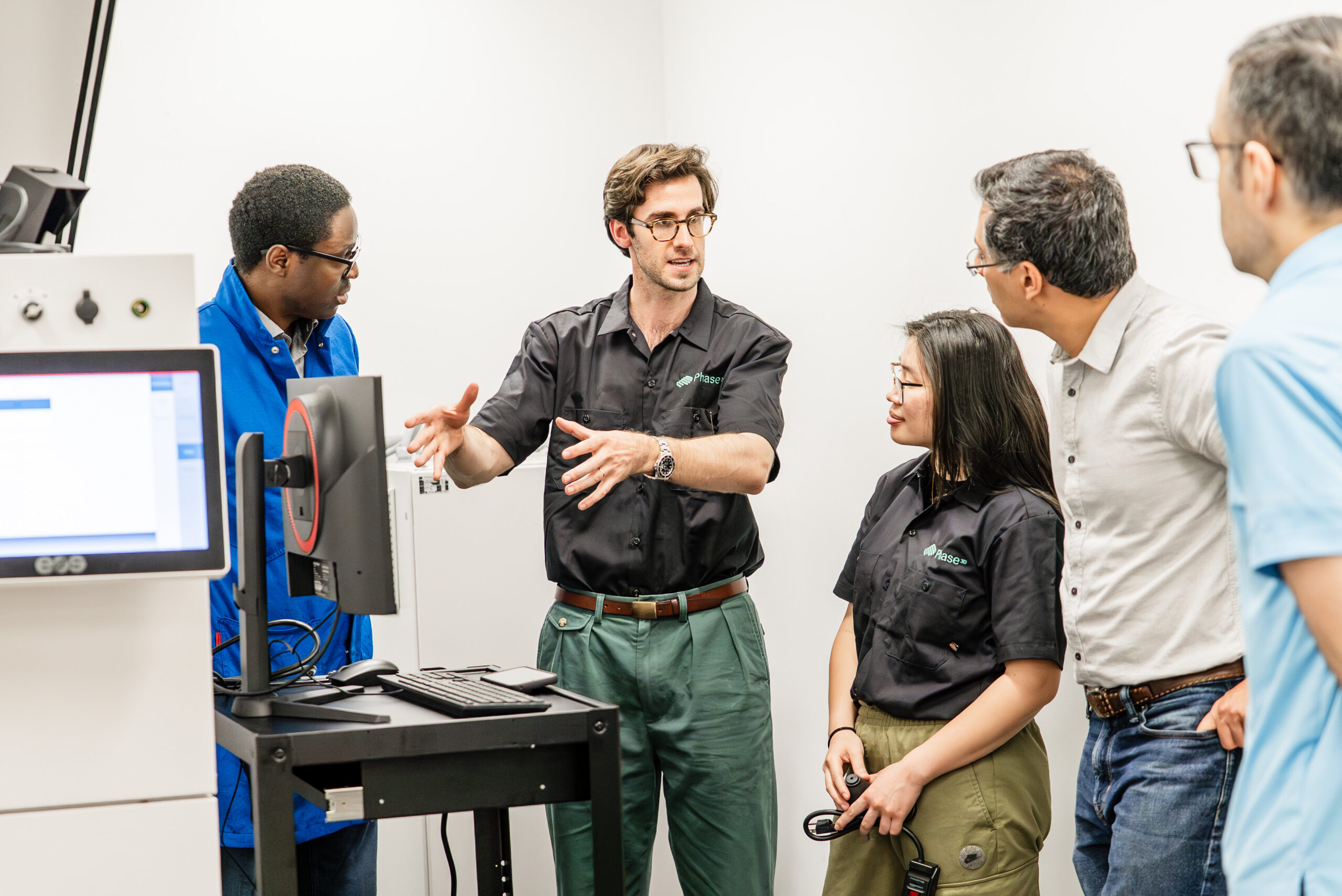
Phase3D, the Chicago-based in-situ monitoring (ISM) provider for metal additive manufacturing, has won a NASA research contract to advance qualification of 3D-printed space hardware. The award pairs Phase3D with an unnamed aerospace and propulsion prime to deploy its Fringe Inspection hardware and Fringe Qualification software on an EOS M300-4 quad-laser LPBF system. The test case uses structural brackets built from Invar 36, an iron-nickel alloy, with the goal of cutting the standard 18-plus-month qualification timeline for space-grade AM parts by 2-3x. Phase3D notes that metal AM parts for space currently carry rejection rates as high as 30 percent, largely a result of destructive testing and CT scanning done after the build rather than monitoring during it.
The contract lands weeks after Phase3D closed an oversubscribed funding round, and it illustrates why: pairing a qualified in-situ monitoring stack with a propulsion prime on a widely deployed LPBF platform hits three adoption drivers at once, national-security-linked demand, EOS's installed base, and the qualification bottleneck that has kept metal AM out of flight-critical production. Layer-by-layer, weld-by-weld data capture reframes qualification as a build-time record rather than a post-build forensic exercise, which is the core promise behind NASA's interest. Few vendors have built comparable ISM systems over a multi-year horizon, and the qualification-data requirements make it structurally hard for a late entrant to catch up quickly.
If Phase3D's rejection-rate and timeline claims hold up under this contract, it strengthens the case that in-situ monitoring, not printer hardware alone, is becoming the gating factor for scaling metal AM into aerospace, defense, and energy production programs.
Topics