ASU Researcher Wins $550K NSF CAREER Award to Solve Multi-Metal AM Cracking
Originally reported by Manufactur3D
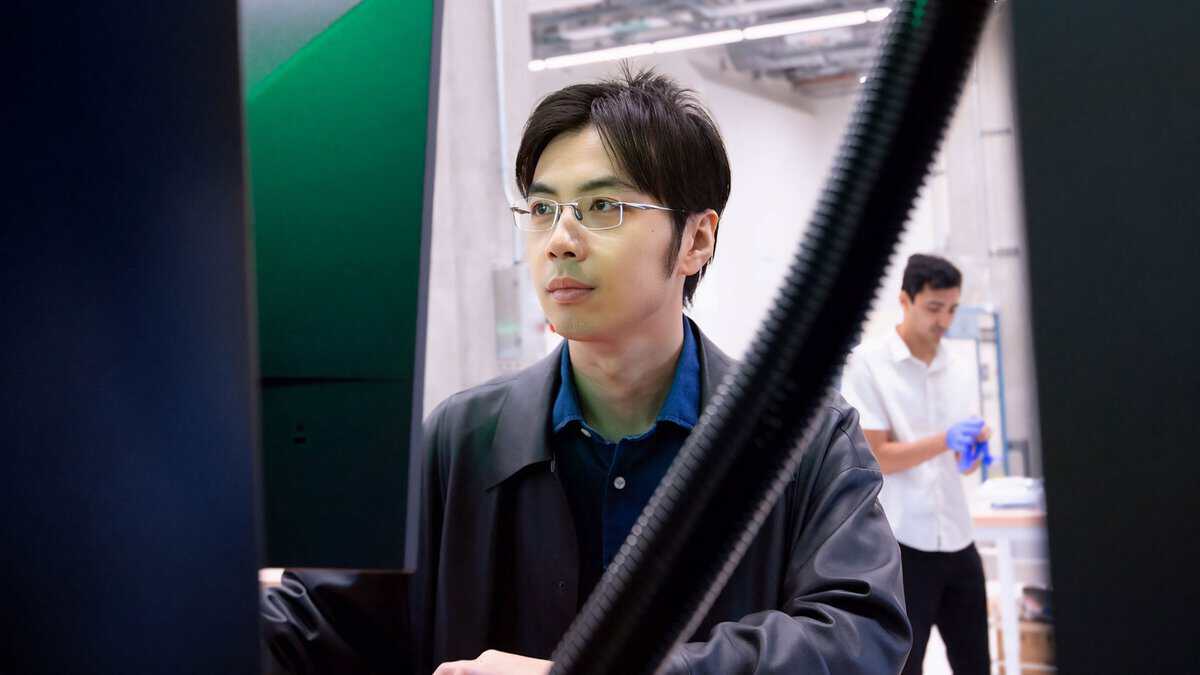
Arizona State University assistant professor Zhengtao Gan has received a $550,000 National Science Foundation CAREER Award to develop predictive models that prevent interfacial cracks in multi-metal additive manufacturing. The five-year grant supports Gan's work on physics-informed simulations that integrate thermal, mechanical, and chemical effects to predict defects before printing, targeting multi-material powder-bed fusion processes that combine alloys like copper and steel within a single part. The research aims to eliminate the trial-and-error approach currently required to produce reliable multi-metal components for aerospace, energy, and biomedical applications.
This award addresses a fundamental reliability barrier that has kept multi-metal AM in the research phase rather than production deployment. While single-alloy LPBF has matured into serial production for aerospace and medical implants, combining dissimilar metals introduces interfacial cracking from differential thermal expansion and brittle intermetallic formation - a problem that current simulation tools cannot adequately predict. Gan's approach mirrors the broader industry shift toward digital qualification, where predictive models reduce the physical testing burden that slows adoption. The work targets the same qualification bottleneck that has limited multi-material applications to academic demonstrations and niche defense prototypes, despite clear demand for functionally graded components in heat exchangers, rocket nozzles, and orthopedic implants.
From an AM industry perspective, this is a foundational research investment rather than a near-term commercial breakthrough. The practical value will depend on whether Gan's models can be validated against real production-scale LPBF systems and integrated into commercial DfAM software. For aerospace and energy buyers evaluating multi-metal AM, the key signal is not the award itself but whether the resulting simulation tools can reduce the certification cost of graded-alloy parts below the performance benefit threshold. The NSF CAREER mechanism is designed for exactly this kind of long-horizon materials science - the industry should expect results on a 5-10 year timeline, not a product launch cycle.
Topics