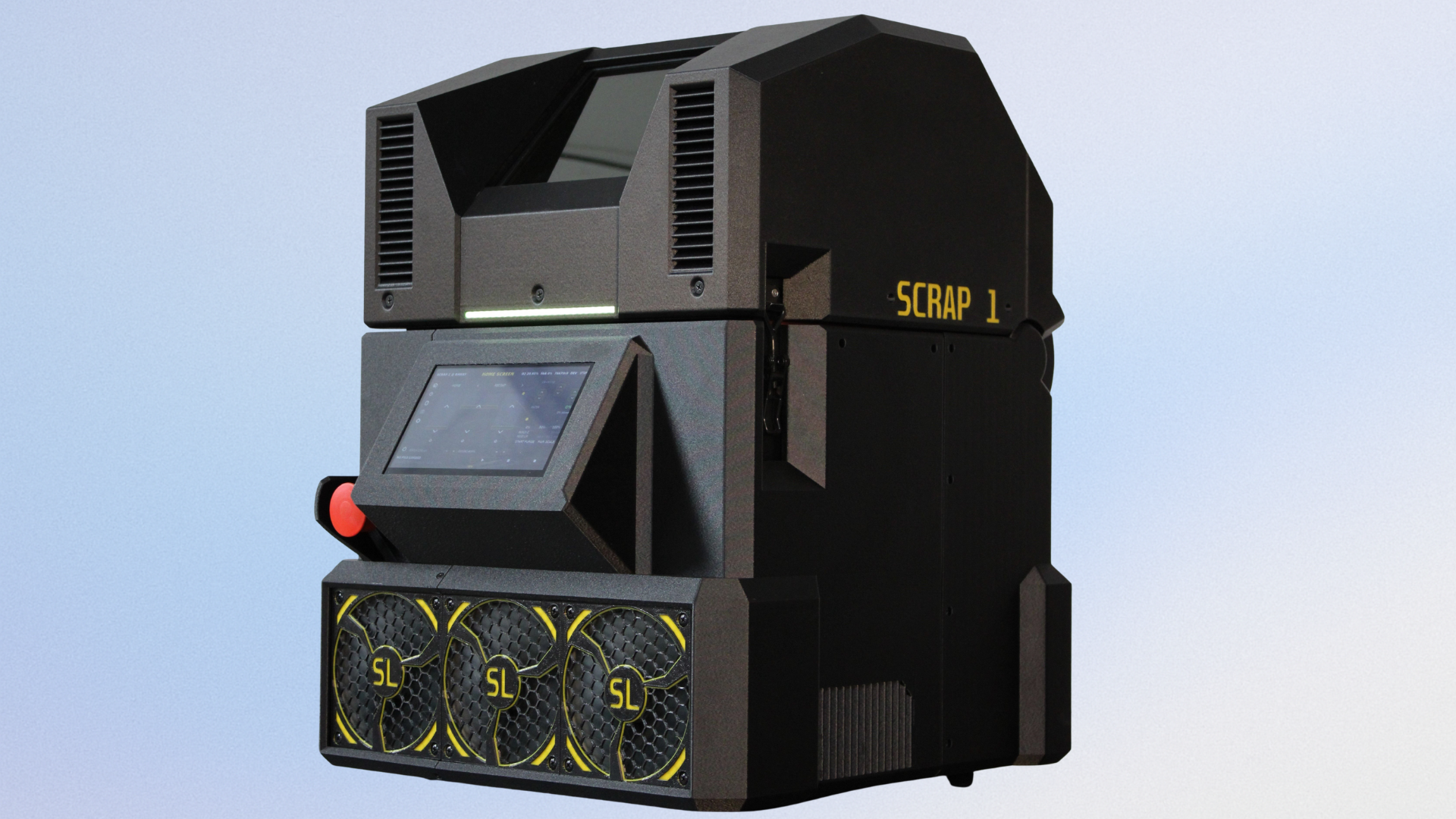
Scrap 1 launches $9,600 workbench-size metal LPBF printer for workshops and labs

Hardware
Originally reported by Tom's Hardware
Scrap 1 has introduced a new metal 3D printer that shrinks industrial laser powder bed fusion (LPBF) to a workbench-sized footprint, priced at $9,600. The system targets workshops, research labs, and small-scale manufacturers who previously could not justify the six-figure entry cost of conventional metal LPBF machines. While detailed build volume and material specifications remain undisclosed, the company positions the printer as a bridge between desktop polymer systems and full-scale industrial metal AM equipment, aiming to democratize access to laser-based metal printing for prototyping and low-volume production.
This launch lands in a market segment that has long been underserved: sub-$50,000 metal AM. Industrial LPBF systems from EOS, SLM Solutions, and Trumpf typically start above $150,000, while binder jetting and DED occupy different cost and capability tiers. Scrap 1's $9,600 price point undercuts even the most affordable metal extrusion systems from Desktop Metal and Markforged, though those use bound metal rods rather than true laser melting. The move echoes the Chinese localization pattern (P2) seen in polymer AM, where cost reduction through supply-chain localization and simplified design opens new demand verticals - in this case, research-academic and industrial-tooling segments that value accessibility over production throughput. The key open question is whether Scrap 1 can deliver reliable part quality and material compatibility at this price without sacrificing the process control that makes LPBF viable for functional metal parts.
For buyers, the practical test is straightforward: does the printer produce repeatable, dense metal parts with standard alloys like 316L or Ti-6Al-4V, and does Scrap 1 offer the material qualification and support ecosystem to make it useful beyond a curiosity? If the answer is yes, this could pull new users into metal AM who were priced out by the capital barrier. If not, it risks becoming a low-cost trap that undermines confidence in the technology. Scrap 1 must now execute on delivery timelines, material qualification, and customer support to convert price-point interest into real adoption.
This article is an AI-assisted rewrite of the linked source report. Facts originate from the source; phrasing is AMPulse's. Use Read Original below to verify, or Report an issue if something is wrong.
Topics