Pankl Racing Systems and Interspectral deepen cooperation for metal 3D printing quality assurance

Service
Originally reported by 3Druck
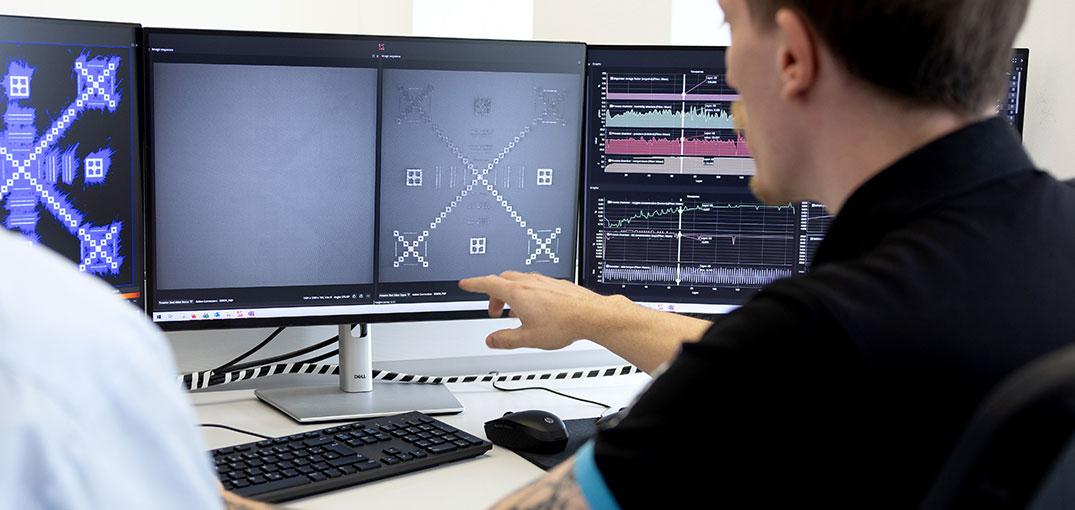
Pankl Racing Systems, a high-performance automotive and aerospace component manufacturer, has expanded its strategic partnership with Interspectral, a Swedish industrial software firm, to deepen the deployment of Interspectral's AM Explorer platform across Pankl's metal additive manufacturing operations. The collaboration, announced June 9, 2026, moves beyond pilot testing into broader production integration, focusing on anomaly detection, qualification workflows, data integration, and real-time monitoring for laser powder bed fusion (LPBF) processes. Pankl will serve as both a production user and a development partner, co-developing capabilities for multi-source data correlation, including machine sensor data, optical tomography, and quality metrics. Isabelle Hachette, CEO of Interspectral, and Tanja Pfeifer, Business Unit Manager at Pankl Racing Systems AG, both emphasized the goal of making AM a more reliable and scalable production technology through tighter process control.
This partnership addresses a persistent bottleneck in industrial metal AM: the inability to economically assure part quality through end-of-line inspection alone. Pankl, which operates in racing and aerospace segments where qualification burden is high and failure cost is severe, is using AM Explorer to shift quality assurance upstream into the build process itself. The move aligns with a broader industry trend where software-enabled process monitoring and in-situ defect detection are becoming prerequisites for scaling LPBF beyond prototype and low-volume production. Interspectral's platform competes with offerings from Addiguru, EOS (EOSTATE), and Sigma Additive Solutions, but differentiates by focusing on multi-modal data fusion and interpretability for production engineers rather than pure machine learning black boxes. For Pankl, the partnership is a practical step toward turning machine fleets into repeatable factories, not just impressive demo cells.
From a practical standpoint, this is a measured but meaningful expansion of a software-hardware partnership in a demanding production environment. Pankl needs to demonstrate that its AM parts can pass qualification gates consistently, and Interspectral needs a reference customer with real production volume and high quality standards. The next milestone to watch is whether the co-developed anomaly detection and data correlation capabilities can reduce post-build inspection costs or shorten qualification cycles for new part programs. If successful, this could serve as a template for other racing and aerospace suppliers facing similar quality assurance challenges.
This article is an AI-assisted rewrite of the linked source report. Facts originate from the source; phrasing is AMPulse's. Use Read Original below to verify, or Report an issue if something is wrong.
Topics