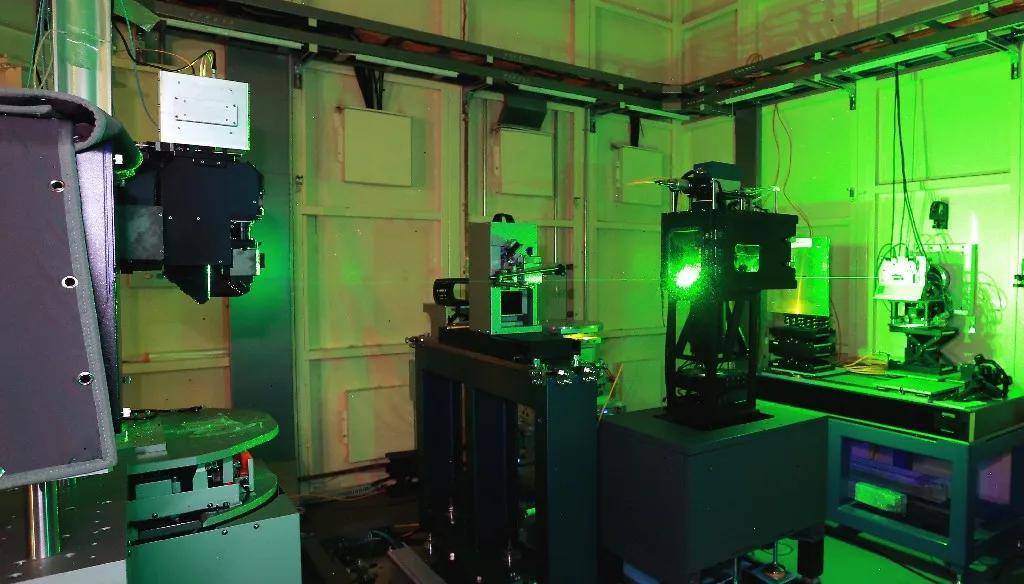
YunYaoShenWei PHOTON-40 Metal Printer Installed at Beijing Synchrotron for In-Situ Additive-Subtractive Research

Hardware
Originally reported by 南极熊3D打印网
YunYaoShenWei (Jiangsu) Technology Co., Ltd. has delivered its PHOTON-40 in-situ metal 3D printer to a Beijing university team, with installation and commissioning completed at the Beijing High Energy Photon Source (HEPS). The system is now in trial operation, making YunYaoShenWei the first Chinese manufacturer to achieve dual compatibility with both the Shanghai Synchrotron Radiation Facility (SSRF) and HEPS. The PHOTON-40 is a second-generation synchrotron-compatible LPBF system featuring a full powder spreading system, scraper, gas flow, Z-axis motion, and a standard build volume of Ø60×H80 mm. It supports interchangeable chambers for conventional printing, flexible height and rotation for transmission and diffraction experiments, and optional preheating up to 1000°C. The open parameter system allows users to create custom CLI files and adjust laser power, scan speed, jump speed, delay times, layer rotation, and offset, enabling real-time observation of melt pool dynamics, keyhole evolution, defect formation, and phase transformation during the printing process.
This deployment addresses a critical bottleneck in additive manufacturing research: the inability to observe and characterize the printing process in real time at synchrotron facilities. Previously, in-situ synchrotron metal printing equipment was 100% imported, with high costs, long customization cycles, and core technology restrictions. By achieving 100% domestic component sourcing and dual-source compatibility, YunYaoShenWei breaks that monopoly and provides Chinese research teams with a fully controllable, open-architecture platform. The PHOTON-40 directly supports the aerospace qualification grind by enabling mechanistic studies of defect formation and microstructure evolution in high-temperature alloys, and it accelerates materials development for extreme applications such as nuclear energy and biomedical implants. The move also aligns with the broader Chinese localization arc pattern, where domestic suppliers are moving from matching specifications to integrating materials, service capacity, and customer references at major national facilities.
For the AM industry, the practical significance is clear: the PHOTON-40 turns synchrotron beamlines into functional additive manufacturing laboratories, allowing researchers to replace empirical trial-and-error with mechanism-driven process optimization. YunYaoShenWei must now demonstrate that the system can consistently produce high-quality data across multiple beamlines and support collaborative research programs with leading institutes. For buyers and users, the key question is whether the open parameter system and interchangeable chambers translate into reproducible experimental protocols that can be shared across the research community. This is a solid step for in-situ characterization infrastructure, but the real value will be measured by the number of peer-reviewed publications and validated process windows it enables over the next 12-18 months.
This article is an AI-assisted rewrite of the linked source report. Facts originate from the source; phrasing is AMPulse's. Use Read Original below to verify, or Report an issue if something is wrong.
Topics