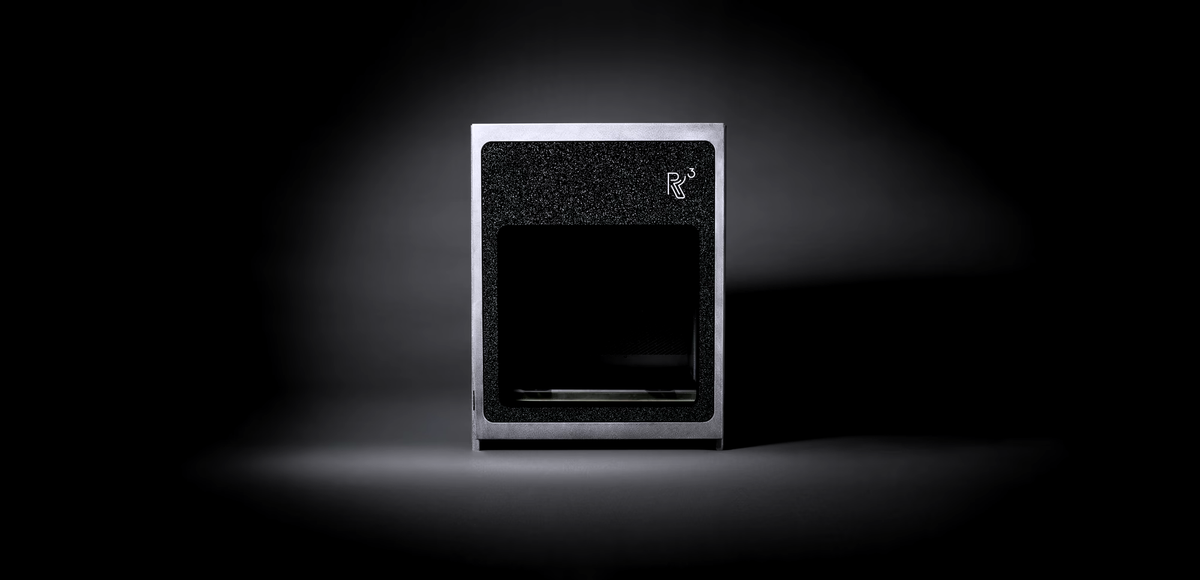
R3 Printing emerges from stealth with material extrusion systems for high-temperature polymers

Hardware
Originally reported by TCT Magazine
R3 Printing has emerged from eight years of stealth development to launch two material extrusion 3D printers: the R3 Printer and the R3 Printer Ultra. The R3 Printer, with a 90°C chamber and 155°C bed, processes ASA, PC, PA, PP, PPS, PPA, PVDF, and standard thermoplastics. The R3 Printer Ultra, featuring a 150°C chamber and 235°C bed, adds PEEK, PEKK, PEI (Ultem), TPI, PSU, PES, and PPSU capability. Both machines are available to order now, with Ultra shipping starting August 31, 2026. Co-founders Paul Sieradzki and Petra Wood, former service bureau operators, designed the systems for production-floor reliability rather than lab demos, and are manufacturing in the United States.
This launch enters a crowded but segmented market where desktop FDM/FFF has commoditized, yet industrial-grade high-temperature polymer extrusion remains a narrower, higher-value tier. R3 Printing competes directly with systems from Intamsys, AON3D, Roboze, and Stratasys’ Fortus line, but its eight-year development cycle and domestic manufacturing claim differentiate it from the venture-capital-fueled hype cycle that characterized many 2020–2022 entrants. The company’s emphasis on chamber temperatures sufficient for PEEK and PEI places it in the segment where material qualification and thermal stability matter more than speed or build volume. The founders’ service-bureau background suggests an operator’s sensibility about uptime and total cost of ownership, which is often absent in hardware-first narratives.
For buyers evaluating high-temperature polymer AM, the practical question is whether R3 Printing can deliver on reliability claims without the installed-base evidence that established vendors provide. The company must now convert pre-orders into reference accounts and demonstrate that its eight years of iteration produced a machine that holds thermal gradients consistently over production shifts. The Ultra’s August shipping date will be the first real test. Until then, this is a credible but unproven entrant in a segment where qualification cycles are measured in months, not weeks.
Topics