Rem3dy raises £14 million for personalized 3D-printed vitamin gummies

Application
Originally reported by SEKAPRI
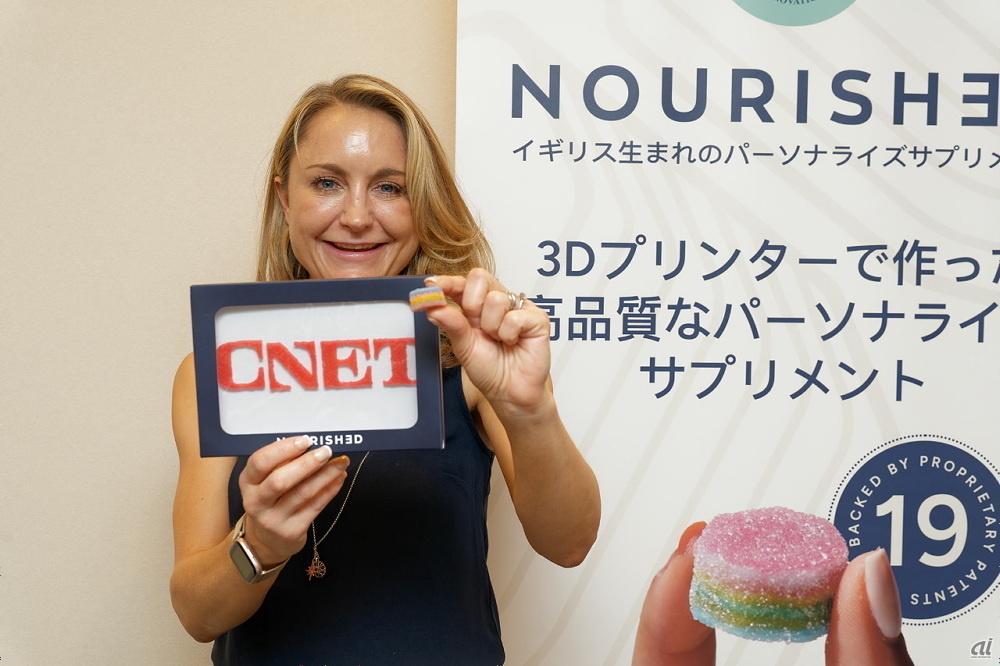
UK-based health-tech startup Rem3dy has closed a £14 million (approximately ¥3.01 billion) funding round, backed by a syndicate including Japanese beverage giant Suntory, Spanish brewer Estrella Galicia, Indian hospital network Apollo Hospitals, and French pharmaceutical firm UPSA. The company manufactures and sells personalized vitamin gummies under its Nourish3D brand, using proprietary 3D printing technology to produce customized nutritional supplements. CEO Melissa Snowover stated the funds will be deployed to expand into the US, Asia-Middle East, and Indian markets, and that the company is also developing a personalization offering for pets.
This round is notable for the breadth of its strategic investors, spanning beverage, healthcare, and pharmaceutical verticals - a signal that personalized nutrition via additive manufacturing is gaining credibility as a production platform rather than a novelty. Rem3dy operates at the intersection of food-adjacent AM and health-tech, a niche that remains small but is attracting cross-sector capital as consumer health personalization trends accelerate. The company’s Nourish3D platform differentiates through AI-based formulation and automated manufacturing, positioning it against other personalized nutrition players such as Nourished (UK) and VitaMe (US), though Rem3dy’s proprietary printer gives it a hardware-integration advantage. The mention of pet personalization also hints at a broader addressable market beyond human consumers.
From an AM industry perspective, Rem3dy represents a rare example of a consumer-facing 3D printing application that has secured meaningful, multi-sector strategic backing - a contrast to the many food-printing ventures that struggled to scale. The company’s next challenge is execution: translating this capital into repeatable production capacity across multiple geographies while maintaining the regulatory compliance required for ingestible products. For investors and observers, the key metric to watch is not machine sales but unit economics and repeat order rates in the US and Indian markets.
This article is an AI-assisted rewrite of the linked source report. Facts originate from the source; phrasing is AMPulse's. Use Read Original below to verify, or Report an issue if something is wrong.
Topics