Spherene launches browser-based SphereneNXT platform for 3D printed internal structure design

Software
Originally reported by TCT Magazine
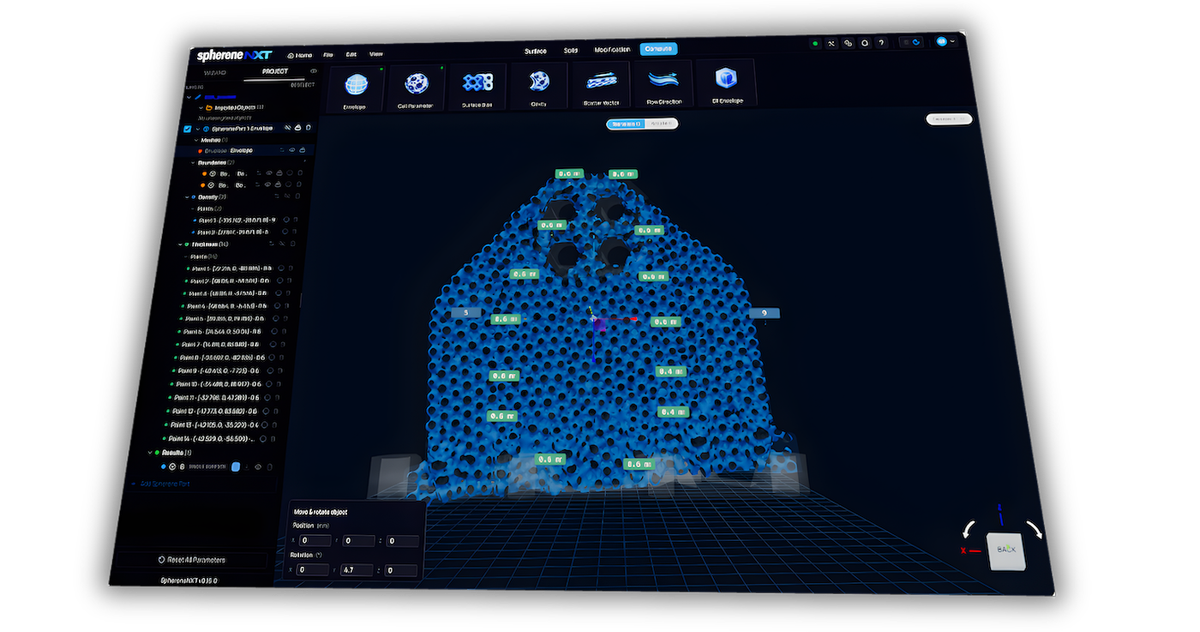
Spherene, a Swiss software company, has launched SphereneNXT, a standalone browser-based platform for designing and exporting 3D printed internal structures. The platform enables engineers to upload CAD or mesh files, including multi-body assemblies, and apply Spherene's patented ADMS (Adaptive Density Minimal Surface) adaptive metamaterial structures, TPMS lattice infills, or field-driven adaptive designs directly in a web browser. Users can vary cell size, density, thickness, and orientation continuously across a part, and export to multiple CAD and mesh formats or send directly for printing. Spherene CEO Claudio Nessi stated the platform aims to make complex internal design and metamaterial accessible for any engineer or designer, with more features planned.
This launch addresses a persistent gap in the AM software stack: the ability to design complex, load-adaptive internal structures without requiring specialized desktop software or deep simulation expertise. SphereneNXT competes with established lattice-generation tools from nTop, Carbon's Design Engine, and Autodesk's Netfabb, but differentiates by operating entirely in-browser and focusing on infill rather than outer shape, making it CAD-agnostic. The platform's ADMS technology, which generates aperiodic, density-field-driven minimal surfaces that conform to part geometry, targets applications in aerospace, medical, and industrial tooling where weight reduction and mechanical performance are critical. By removing installation barriers and supporting multi-format export, Spherene is betting on accessibility to drive adoption among small-to-mid-size engineering teams that lack dedicated DfAM specialists.
For engineers evaluating SphereneNXT, the practical test will be whether the browser-native workflow can match the fidelity and control of desktop tools for production-grade parts, particularly in regulated verticals like aerospace and medical where internal structure validation is part of qualification. Spherene must also demonstrate that its ADMS structures can be reliably printed across multiple AM processes and materials without post-processing issues. The platform's success hinges on building a user base that finds the trade-off between convenience and capability acceptable for their specific use cases.
Topics