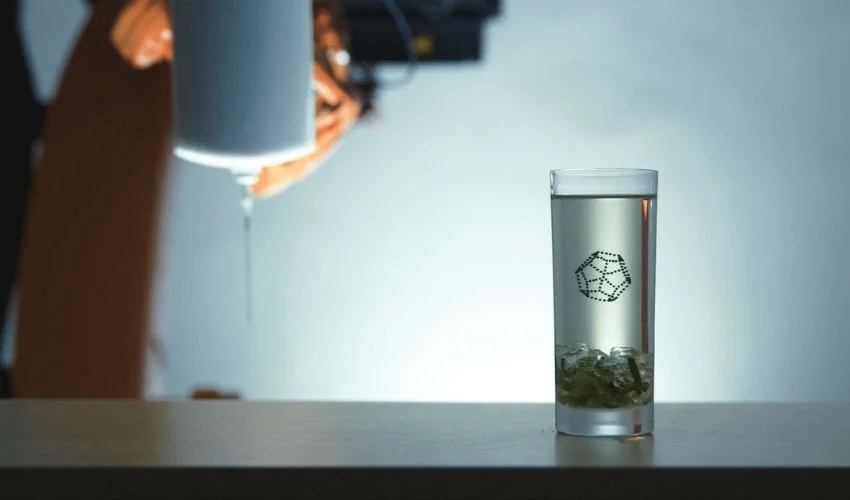
Print A Drink brings 3D-printed cocktails to events with custom robot slicer and FDM prototyping

Hardware
Originally reported by 3DNatives
Austrian startup Print A Drink has commercialized a robotic system that 3D-prints layered cocktails directly into glasses, operating as a service for corporate events, trade fairs, and shows. Founder Benjamin Greimel, who developed the concept during his master's in Industrial Design at the University of Arts Linz, programs custom G-code via a proprietary slicer that translates CAD cocktail models into robot motion paths. The company now runs full robotic setups in both Europe and the United States, with the U.S. generating the majority of revenue. Greimel uses desktop FDM/FFF printers for rapid prototyping of custom tools and fixtures, relying on iterative design without post-processing to refine hardware for each event deployment.
This is a niche application of additive manufacturing that sits at the intersection of food-tech novelty and industrial robotics, not a production-scale AM play. Print A Drink uses a KUKA robot arm as the deposition tool, with Greimel's custom slicer converting 3D models into robot code - a workflow that mirrors how industrial AM systems translate CAD to machine paths, but applied to miscible liquids rather than thermoplastics or metal powders. The business model is pure service: Greimel operates as a solo founder handling everything from client communication to dishwashing, deliberately keeping the company lean. This avoids the capital-intensive scaling trap that has consumed many AM startups, but it also caps the addressable market at event-based entertainment rather than food production or consumer goods. The technology has no direct AM competitor; it is closer to molecular gastronomy tools like Spinzall or cocktail robotics from companies like Makr Shakr, but differentiated by its layer-by-layer deposition approach.
For the AM industry, Print A Drink is a curiosity rather than a signal. It demonstrates that additive principles can extend beyond conventional materials into food and beverage presentation, but the solo-founder, service-only model means it will remain a boutique offering. The practical takeaway is that Greimel has built a self-sustaining niche business without venture funding or a large team - a rare outcome in a sector where most hardware startups burn through capital chasing scale. Buyers should view this as a premium event entertainment option, not a preview of mass-market 3D-printed beverages.