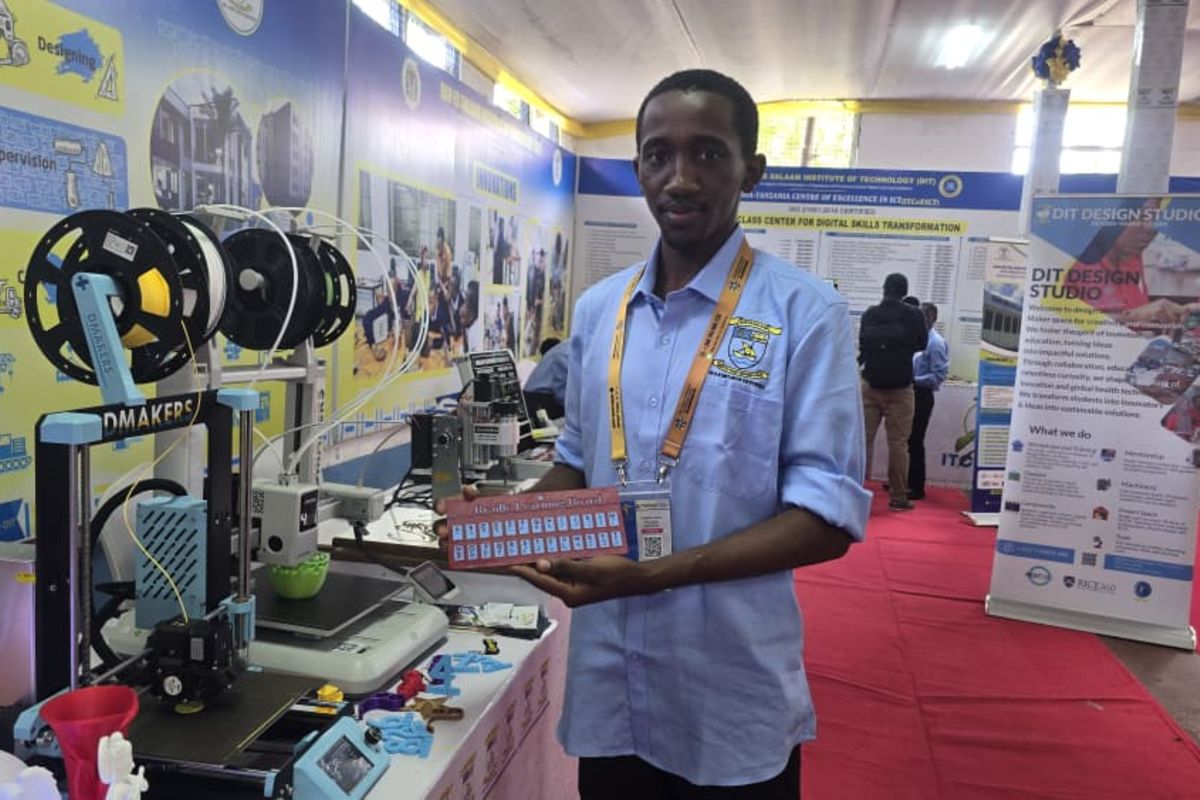
Tanzanian Startup Swahiki Maker Converts Plastic Waste to 3D Printer Filament, Plans 150 Labs Nationwide

Hardware
Originally reported by streamlinefeed.co.ke
Swahiki Maker, a Tanzanian hardware startup based in Dar es Salaam, has developed a localized circular manufacturing system that converts urban PET plastic waste into 3D printing filament while assembling its own FDM/FFF printers. Founder Mr. Sakaya announced the "one 150 Lab" initiative, targeting deployment of 150 digital fabrication laboratories across all Tanzanian regions by partnering with schools, universities, and community hubs. The startup provides locally built printers and recycled filament, while partner institutions supply space and operational oversight. This model eliminates import duties on both hardware and consumables, directly linking plastic waste collection to high-value production.
This development fits the broader pattern of localized AM supply chains emerging outside traditional industrial centers, particularly in regions where import costs and logistics barriers have historically limited adoption. Swahiki Maker addresses two structural deficits simultaneously: the high cost of imported prototyping equipment and the environmental burden of unmanaged plastic waste. The initiative mirrors East Africa's shift from software-only tech ecosystems toward hardware engineering, seen in Kenya's Gearbox and Rwanda's drone manufacturing investments. However, Swahiki Maker's circular material loop-processing locally collected PET into filament-creates a self-reinforcing economic incentive for waste collection, potentially improving livelihoods for Dar es Salaam's estimated 1,200 informal waste pickers. The success of this model depends on integrating CAD training into formal curricula, as printer access without design skills yields limited value.
From an AM industry perspective, this is a pragmatic, resource-constrained deployment that prioritizes accessibility over performance. The FDM/FFF process using recycled PET will not compete with industrial PBF-LB or MJF systems on precision or throughput, but that is not the objective. Swahiki Maker's real test is execution: whether 150 labs can be staffed with trained operators, supplied consistently with recycled filament, and integrated into school curricula. For buyers in East Africa, this represents the most cost-effective path to hands-on AM education and prototyping, provided the startup maintains material quality and machine reliability at scale.
Topics