TDK Corporation acquires Fabric8Labs, electrochemical AM specialist, for undisclosed sum
Originally reported by 3D ADEPT
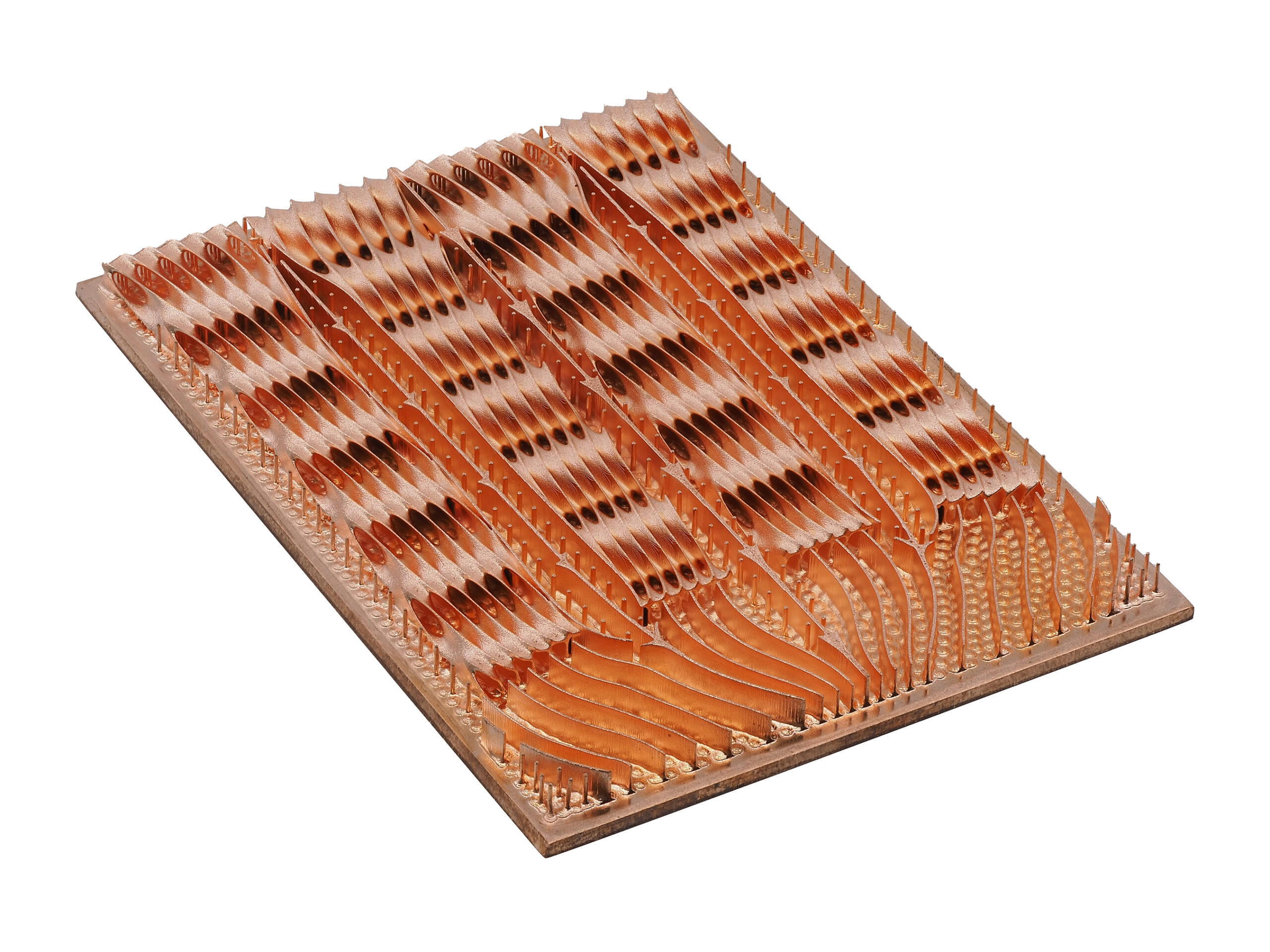
TDK Corporation, the Japanese electronics giant with over $14 billion in annual revenue, has acquired Fabric8Labs, a San Diego-based startup specializing in Electrochemical Additive Manufacturing (ECAM). The deal, announced June 15, 2026, brings Fabric8Labs’ technology - which deposits pure copper and other metals at room temperature directly onto temperature-sensitive substrates like PCBs and silicon - into TDK’s global manufacturing network. Fabric8Labs had raised $73.3 million prior to the acquisition, including a $50 million Series B in 2023 led by Intel Capital and SAIC. Financial terms of the acquisition were not disclosed. Fabric8Labs’ ECAM process uses localized electrodeposition to build 3D structures without thermal stress, enabling features like high-purity copper cold plates, antenna structures, and embedded cooling channels that cannot be produced via LPBF or binder jetting due to copper’s reflectivity and thermal conductivity challenges.
This acquisition fits a pattern where large industrial conglomerates absorb specialized AM process developers to internalize a capability rather than license it. TDK, which already manufactures electronic components, sensors, and energy devices, gains a room-temperature metal deposition process that integrates directly into its existing PCB and semiconductor packaging workflows - a value-chain adjacency that no powder-bed or binder-jetting process can claim. The move sidesteps the qualification grind of aerospace and defense, targeting instead high-volume consumer electronics and data-center thermal management, where copper’s thermal conductivity (400 W/m·K) is critical and where TDK already has captive demand. Fabric8Labs’ ECAM technology also eliminates post-processing steps like sintering and support removal, addressing the ROI and post-processing discipline that often limits metal AM adoption in electronics. The acquisition signals that TDK sees ECAM not as a prototyping curiosity but as a production-scale complement to its existing subtractive and lithographic manufacturing lines.
For the AM industry, this is a concrete validation that electrochemical deposition can compete with thermal metal AM processes in specific high-value niches - but only when backed by a parent with captive demand and manufacturing scale. Fabric8Labs must now prove that its ECAM process can hold tolerances and throughput across TDK’s production volumes, not just in lab demonstrations. The technology’s real test will be whether TDK can integrate it into existing PCB assembly lines without disrupting yield, and whether the cost-per-part at scale can undercut traditional etched or machined copper components. If successful, this could open a new segment for metal AM in consumer electronics and thermal management that does not compete with LPBF or binder jetting but rather expands the definition of what additive manufacturing can address.
This article is an AI-assisted rewrite of the linked source report. Facts originate from the source; phrasing is AMPulse's. Use Read Original below to verify, or Report an issue if something is wrong.
Topics