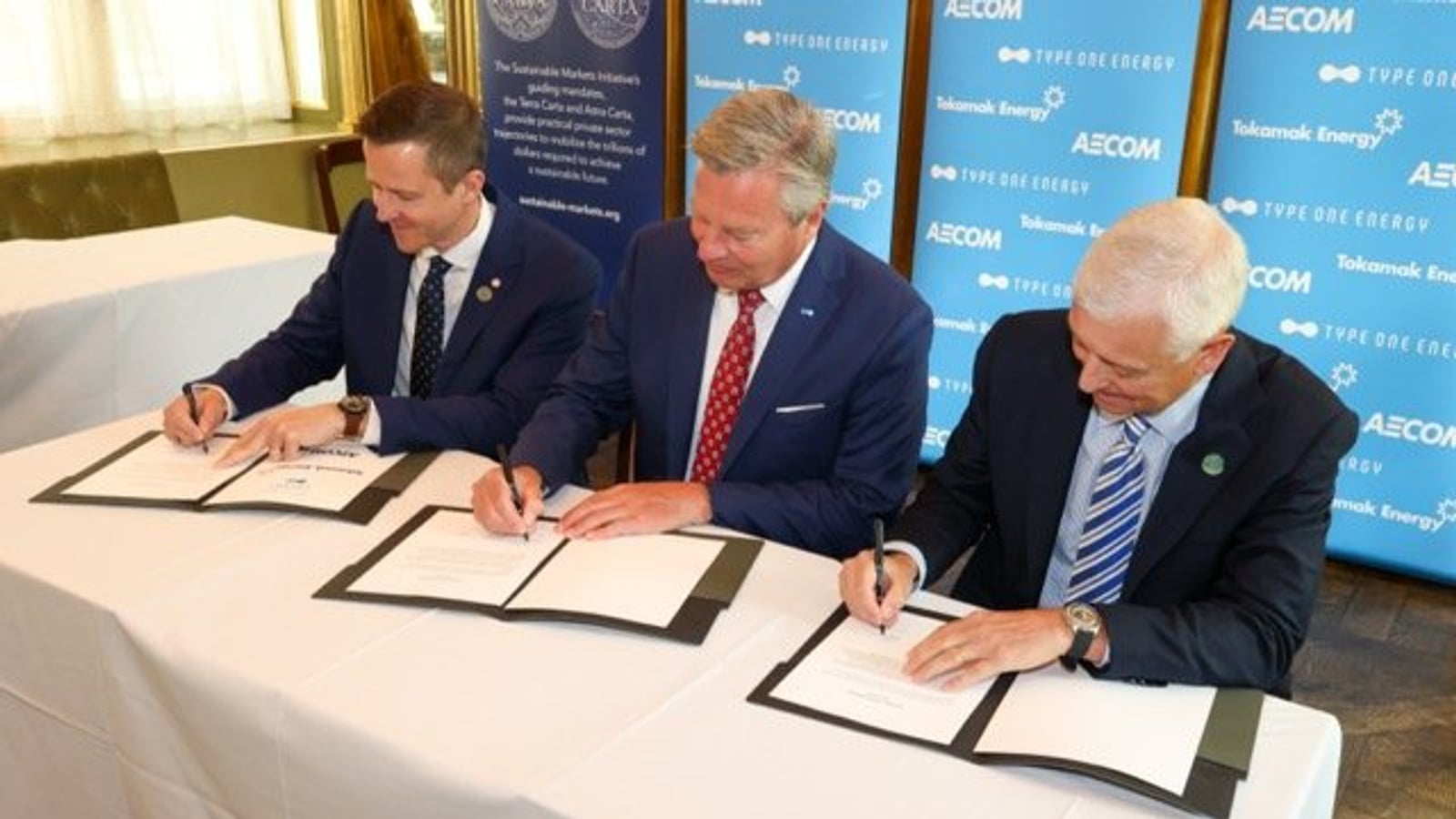
Type One Energy, AECOM, Tokamak Energy Launch UK Infinity Fusion Consortium for Commercial Stellarator Plant

Hardware
Originally reported by enlit.world
Type One Energy, AECOM, and Tokamak Energy have formed the UK Infinity Fusion Consortium to develop the UK's first private-sector-led commercial fusion power plant. The consortium will combine Type One Energy's 400MWe Infinity Two stellarator design with AECOM's engineering and infrastructure delivery capabilities and Tokamak Energy's high-temperature superconducting (HTS) magnet technology and manufacturing expertise. The initiative targets a UK Infinity Two project that complements the UK government's STEP fusion programme, leveraging experience from Type One Energy's parallel Infinity Two project at the Tennessee Valley Authority's Bull Run site in the US, which targets commercial operation in 2034. An initial licensing application has been submitted, marking a regulatory breakthrough for fusion's distinct risk profile versus fission.
This partnership places Type One Energy's stellarator architecture at the center of a transatlantic commercial fusion push, directly leveraging advanced manufacturing techniques-including metal additive manufacturing for complex, high-precision stellarator components-as a core enabling technology. The consortium structure mirrors the aerospace qualification grind pattern: Type One is embedding AM-produced parts into a heavily regulated, long-cycle energy infrastructure program, where qualification and supply-chain lock-in will determine success. The deal also updates the open debate on whether stellarators or tokamaks will dominate the first wave of commercial fusion; by securing Tokamak Energy's HTS magnet expertise-already named as STEP's magnet systems partner in April 2026-Type One gains credibility in the UK's fusion supply chain while keeping its stellarator design as the primary architecture. For the AM industry, this signals sustained demand for large-format metal AM (likely DED and LPBF) capable of producing monolithic, high-tolerance components for magnetic confinement systems, a niche but high-value application vertical.
For Type One Energy, the consortium's practical value lies in de-risking its UK regulatory pathway and securing industrial partners with existing fusion program relationships. The company must now demonstrate that its stellarator design can be manufactured at scale using AM and conventional methods within the 2034 TVA timeline, while the UK project provides a parallel track for supply chain localization. Buyers and investors should watch for specific AM component qualification milestones-such as first-of-a-kind stellarator vacuum vessel or divertor parts-as the real signal of manufacturing readiness, not consortium announcements alone.
Topics