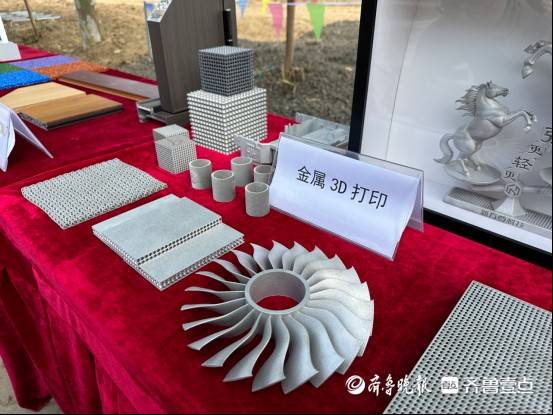
Shandong Space Metal Science and Technology Industrial Park launches large-format SLM base in Rizhao
Hardware
Originally reported by 齐鲁晚报·齐鲁壹点
Shandong Space Metal Science and Technology Industrial Park held a project promotion meeting in Rizhao High-tech Zone on June 16, 2026, announcing the construction of a large-format aluminum powder 3D printing base. The facility will rely on self-developed large-format SLM metal 3D printing technology, with equipment developed by a Tsinghua PhD team led by founder Nie Gang, who is a national talent program recipient. The park plans 52 large-format and 100 standard printing production lines, with Phase I investing CNY 2 billion and commissioning equipment trials in 2027, targeting full production by 2028. The project integrates metal powder preparation, equipment manufacturing, process control, and software development, claiming 100% domestic core components and algorithms.
This project represents a significant Chinese localization push in metal AM, directly addressing the historical constraints of small build volumes, high costs, and limited serial production that have constrained domestic LPBF adoption. The claimed cost reduction from fully domestic supply chains and integrated production mirrors the Chinese localization arc pattern seen across AM hardware, where domestic entrants leverage supply-chain control to undercut Western OEMs on price while scaling capacity aggressively. The focus on aluminum, copper, and high-temperature alloys targets aerospace lightweighting, AI chip thermal management, and satellite components - three demand verticals where Chinese industrial policy is actively accelerating domestic sourcing. The 10 billion yuan in意向 orders suggests real customer pull, though the project remains in construction phase with no installed capacity until 2027.
From a practical standpoint, this is a capacity expansion announcement with credible industrial backing from a state-owned enterprise partner (Rizhao Transportation Energy Development Group), but it carries execution risk typical of large greenfield AM facilities. The key metric to watch is whether the self-developed SLM systems can achieve the claimed build rates and yield consistency at scale, particularly for aluminum alloys which are notoriously challenging in LPBF due to reflectivity and thermal conductivity. For buyers evaluating Chinese metal AM capacity, this signals growing domestic competition in large-format systems, but qualification timelines for aerospace and nuclear customers will remain measured in years, not quarters.
Topics