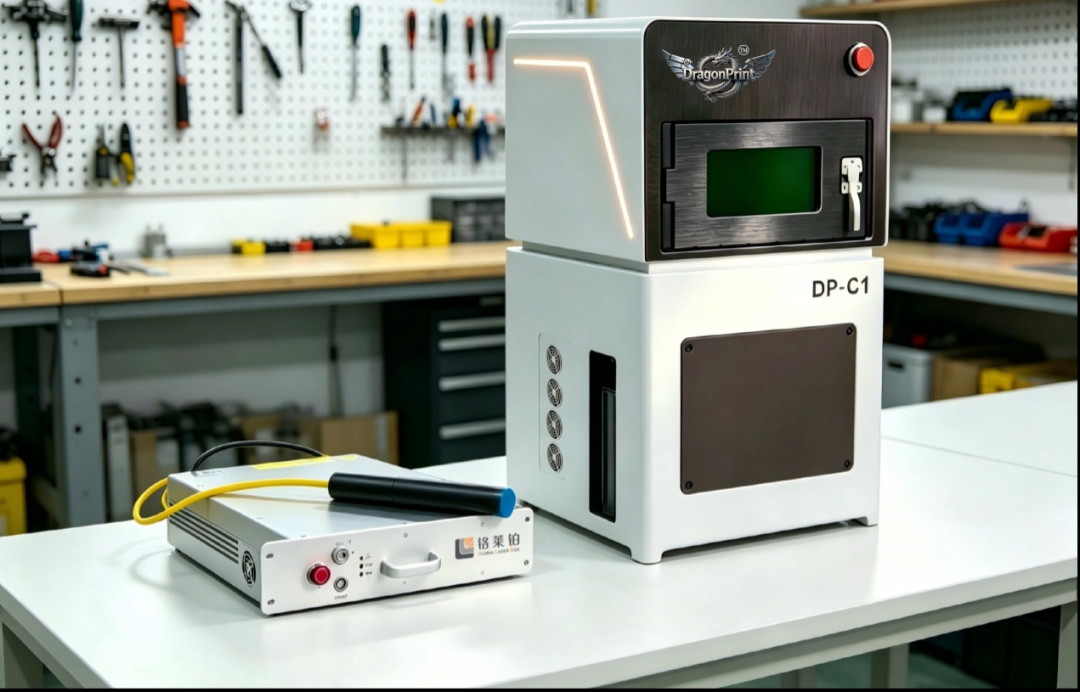
Chromium Platinum launches DP-C1 metal 3D printer targeting consumer segment with AI-assisted modeling

Hardware
Originally reported by 3Druck
Chinese manufacturer Jiangsu Chromium Platinum Digital Technology has announced the DP-C1, a metal 3D printer designed for end consumers, ahead of its international debut at the 2026 Global Consumer Electronics Expo in Shenzhen (June 24–26). The DP-C1 measures 500 × 515 × 830 mm, close to desktop FDM printer dimensions, and features a self-developed 300W air-cooled fiber laser capable of processing stainless steel. The company claims AI-assisted modeling allows users to generate ready-to-print models from photos, text descriptions, or voice commands, and operates the IronNova maker community and Creative Workshop model library with over 10,000 free metal models. Founded in 2023, Chromium Platinum has sold over 1,000 industrial SLM systems across 60 countries and previously developed the compact GLB-120M for dental applications.
This launch represents a significant attempt to bridge metal LPBF technology into the consumer and prosumer space, a segment historically dominated by polymer FDM/FFF printers from companies like Bambu Lab and Creality. The DP-C1's air-cooled laser and compact footprint address two key barriers to consumer metal AM: system size and cooling complexity. However, the practical challenges of metal powder handling, post-processing (sintering, support removal), and safety requirements remain unresolved in the consumer context. Chromium Platinum's existing industrial customer base and dental-sector experience provide some credibility, but the consumer market demands a fundamentally different support ecosystem - including material supply chains, training, and service networks - that the company has yet to demonstrate at scale.
For the AM industry, the DP-C1 is a notable experiment in expanding metal AM's addressable market beyond industrial and professional users, but it should not be mistaken for an immediate commercial breakthrough. The company must prove that its AI-assisted workflow and community platform can overcome the steep learning curve and safety concerns inherent in metal powder bed fusion. Buyers should evaluate the total cost of ownership, including powder procurement, post-processing equipment, and facility requirements, before considering adoption. This is a product to watch for proof of concept, not a near-term replacement for established desktop polymer systems.
This article is an AI-assisted rewrite of the linked source report. Facts originate from the source; phrasing is AMPulse's. Use Read Original below to verify, or Report an issue if something is wrong.
Topics