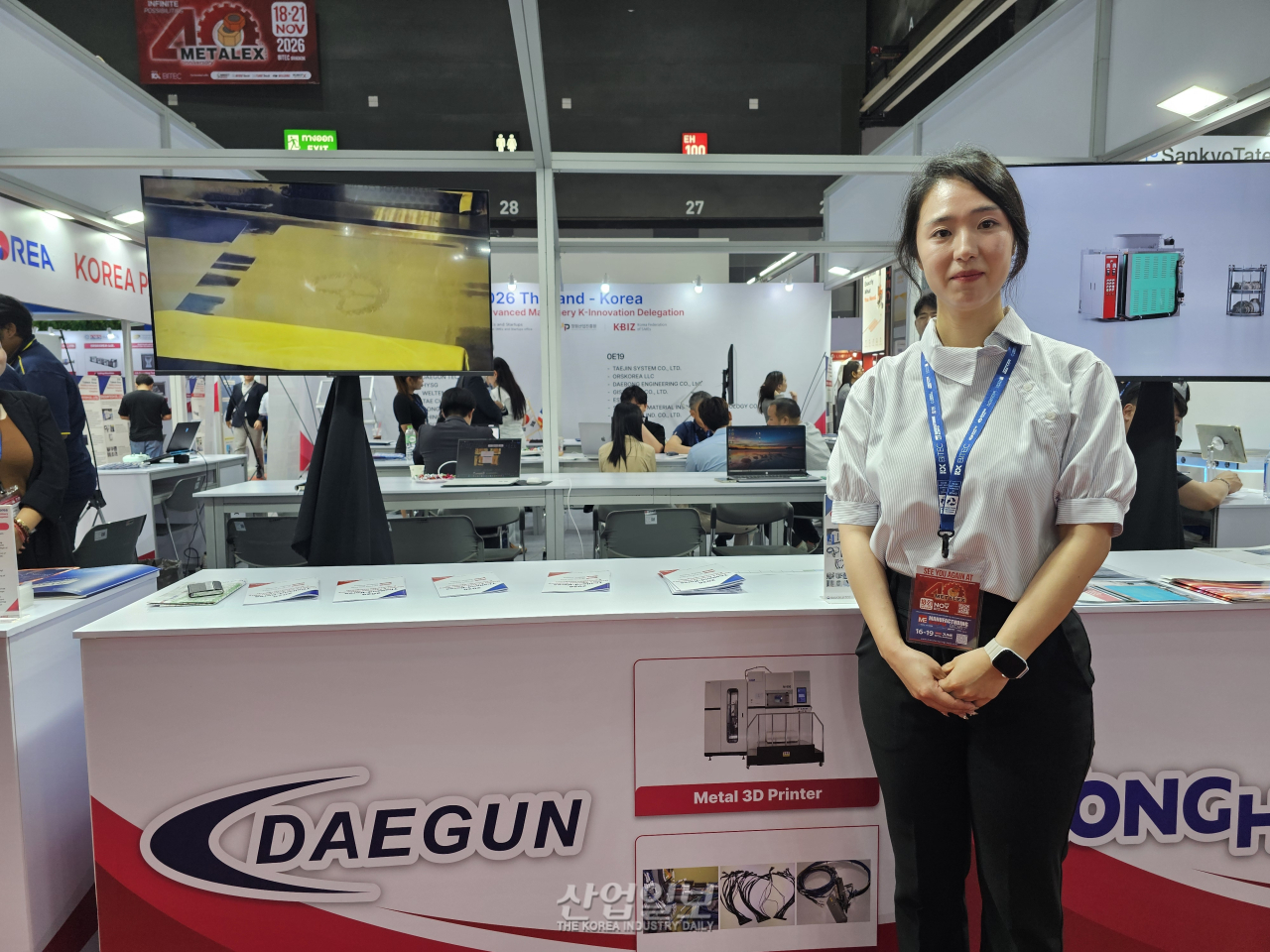
Daegeon Tech unveils metal PBF-LB printers at ME2026, targets defense, aerospace, and mold markets in Southeast Asia

Hardware
Originally reported by KIDD
Daegeon Tech, a Changwon, South Korea-based manufacturer that transitioned from cable harness production to industrial 3D printing, showcased its metal powder bed fusion (PBF-LB) printer lineup at the ME2026 exhibition in Bangkok, Thailand, June 17–20. The company presented three systems under its dpert brand - the M135, M270, and M500 series - capable of processing stainless steel, aluminum, titanium, and tungsten powders. Daegeon Tech also highlighted a multi-laser configuration for its large-format M500 system, designed for high-productivity production of large metal components. The company exhibited through the Changwon Industrial Promotion Agency (CWIP) Korean joint pavilion, targeting Southeast Asian manufacturers in automotive, electronics, and industrial equipment sectors.
This move fits the broader pattern of Korean industrial conglomerates pivoting into AM as a service-led diversification play, leveraging existing manufacturing infrastructure rather than starting from scratch. Daegeon Tech’s cable harness and industrial equipment background provides a real-world production floor context that many pure-play AM startups lack - a rare advantage in the metal PBF-LB segment, where machine uptime, material qualification, and post-processing integration separate viable production cells from demo units. The company’s simultaneous development of magnesium powder and PEEK-specific printers signals an intent to cover both metal and high-performance polymer frontiers, though the magnesium printer remains a niche differentiator until fire-safety and powder-handling standards are proven in production environments. The Southeast Asian push is timely: Thailand’s automotive and electronics supply chains are actively seeking localized AM capacity to reduce tooling lead times, but Daegeon Tech will compete against established Chinese OEMs like BLT and Farsoon, which already have service networks and material qualification packages in the region.
For Daegeon Tech, the practical next step is converting ME2026 booth conversations into paid pilot programs with Thai mold-and-die or aerospace subcontractors. The company’s cable business provides a stable revenue base, so it can afford patient qualification cycles - but it must demonstrate repeatable part quality across its M500 multi-laser system at a customer site, not just at trade shows. Buyers in Southeast Asia should request build-log data and material certification documentation before committing to machine purchases; the Korean origin may offer a perceived quality premium over Chinese alternatives, but that premium must be backed by documented process control.
This article is an AI-assisted rewrite of the linked source report. Facts originate from the source; phrasing is AMPulse's. Use Read Original below to verify, or Report an issue if something is wrong.