EOS Patent Targets Higher SLS Powder Reuse with Silicon Dioxide Additive

Hardware
Originally reported by Fabbaloo
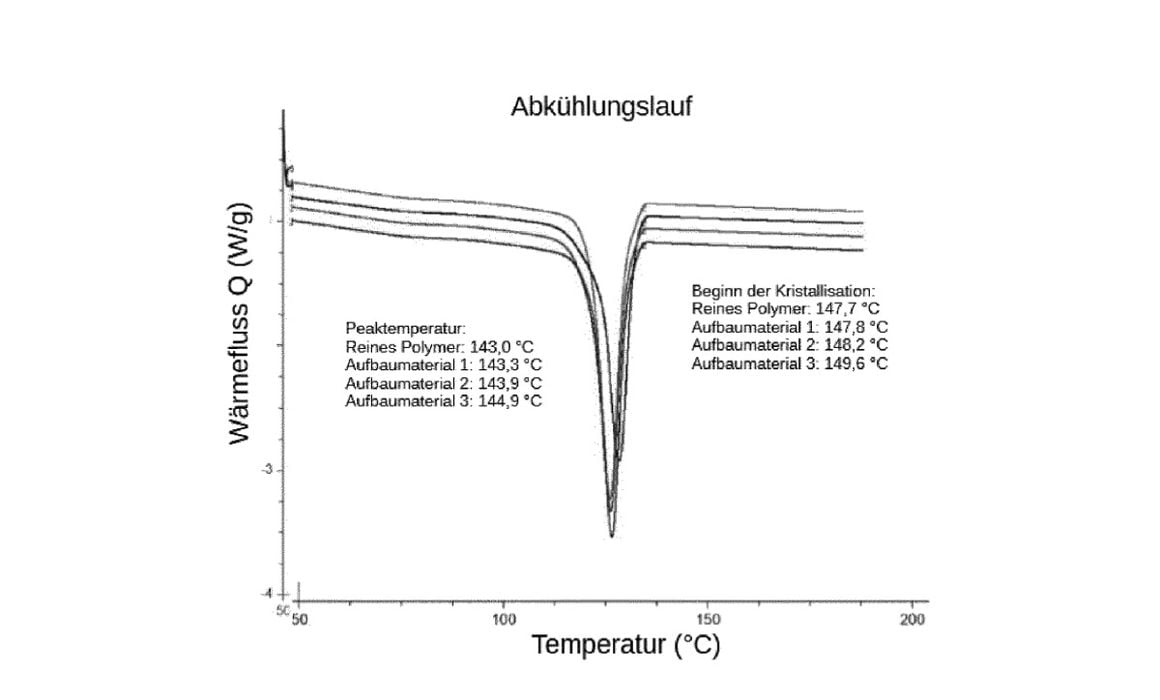
EOS has filed a European patent application (published 20 May 2026) describing a method to increase the reuse ratio of aged polymer powder in selective laser sintering (SLS). The patent proposes blending aged polyamide (PA12) powder with fresh powder containing amorphous silicon dioxide at 0.05–0.10% by weight, enabling aged-to-fresh ratios above the conventional 60:40 cap, with a preferred range of 65:35 to 80:20. Test data shows that certain hydrophobic grades of amorphous silicon dioxide, surface-modified with dimethyldichlorosilane, allowed five refresh cycles at a 70:30 ratio without surface defects, while a comparative PA12 material without the additive showed strong defects after the first cycle. The patent explicitly addresses the need to maintain the sinter window, stipulating that the additive should shift recrystallization temperature by no more than 4°C.
This patent targets a persistent economic bottleneck in polymer powder bed fusion: material refresh rate. In production SLS, unsintered powder degrades through thermal exposure and chain lengthening, forcing operators to blend in fresh powder at ratios typically capped at 60:40 aged-to-fresh. A shift to 70:30 or 80:20 directly reduces virgin material consumption per build cycle, lowering both material cost and waste powder volume. For service bureaus and high-throughput production users running PA12 continuously, even a 10-percentage-point improvement in reuse ratio can meaningfully improve operating margins. The approach is notable for its simplicity - a small flow-aid additive rather than a new machine architecture - and aligns with the industry's growing focus on powder lifecycle economics over raw machine theater. Competitors such as HP (with MJF) and Farsoon have pursued alternative powder management strategies, but EOS's patent claims a specific chemical mechanism that preserves part quality across multiple cycles, not just improved flow.
From a practical standpoint, this is a materials qualification discipline improvement rather than a breakthrough. The patent is early-stage and unverified in production; the real test will be whether the additive remains stable across hundreds of industrial build cycles without introducing contamination or requiring requalification of existing materials. EOS should focus on demonstrating repeatability in a production environment and securing customer qualification data before this becomes a commercial offering. For SLS users, the direction is worth watching, but the current refresh-ratio ceiling is not the primary constraint on adoption - part cost and throughput remain the dominant variables.
This article is an AI-assisted rewrite of the linked source report. Facts originate from the source; phrasing is AMPulse's. Use Read Original below to verify, or Report an issue if something is wrong.