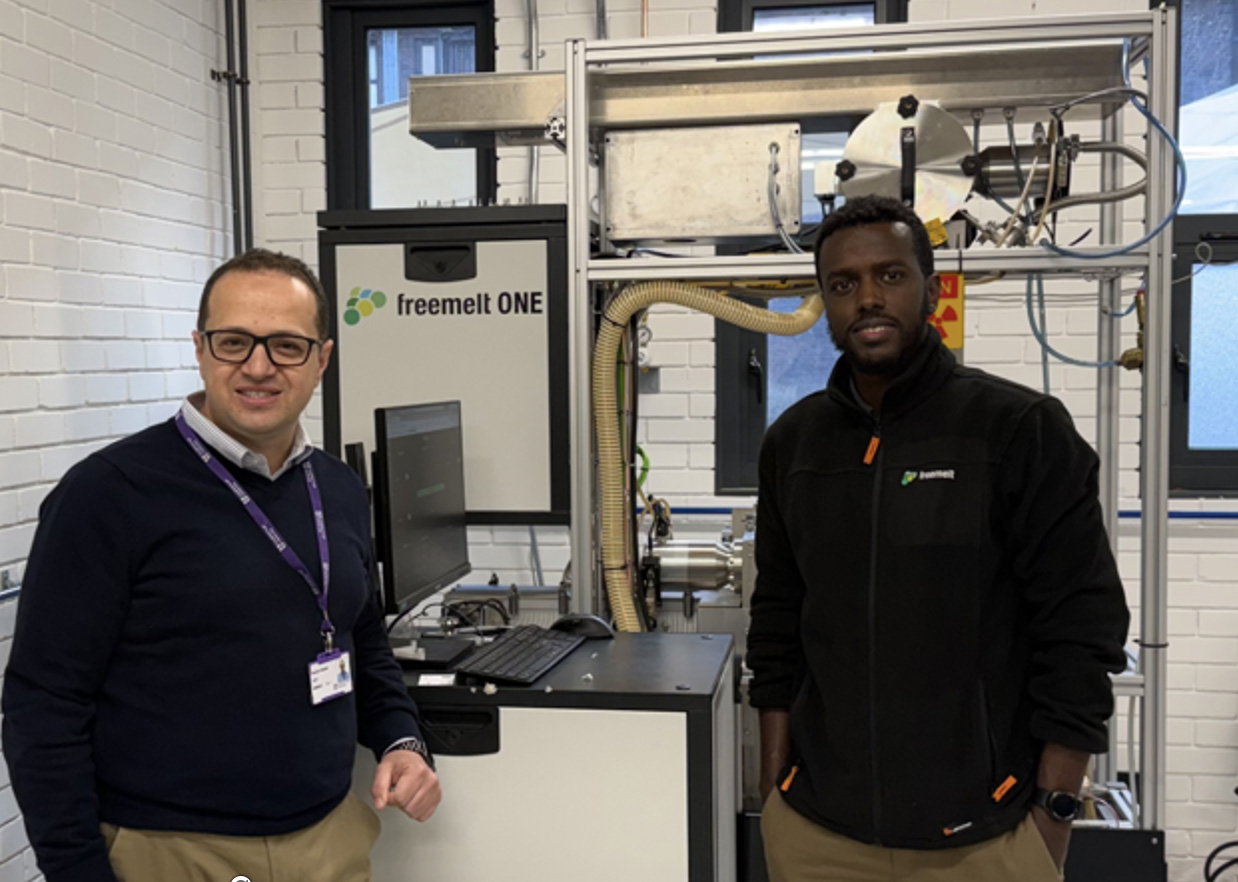
Loughborough University has integrated a Freemelt One electron beam powder bed fusion (E-PBF) system to advance research into refractory alloys including tungsten, niobium, and tantalum.
Originally reported by 3D Printing Industry
Loughborough University has integrated a Freemelt One electron beam powder bed fusion (E-PBF) system to advance research into refractory alloys including tungsten, niobium, and tantalum. Led by Professor Moataz Attallah, the initiative focuses on overcoming the processing limitations of laser-based systems, such as high reflectivity and atmospheric sensitivity, by utilizing the vacuum-based E-PBF process. The project currently supports collaborative efforts with Tokamak Energy and Metamorphic to develop components for nuclear fusion and aerospace propulsion, aiming to secure domestic supply chains for critical materials in the UK.
This development addresses a significant bottleneck in the additive manufacturing of high-performance metals that are unsuitable for standard laser powder bed fusion (LPBF) platforms. While LPBF remains the dominant metal AM technology, its reliance on high-power lasers creates thermal and metallurgical challenges for refractory metals with high melting points and oxygen affinity. By adopting an open-architecture E-PBF system, Loughborough University is positioning itself to bridge the gap between fundamental material science and industrial application, specifically targeting the sovereign manufacturing needs of the UK energy and defense sectors.
For industrial partners, this research provides a pathway to qualify non-standard alloys that were previously considered unprintable. The focus on open-source process parameters is essential for developing the machine learning models required to stabilize build quality for high-value components. Future success depends on the university's ability to translate these laboratory-scale process developments into repeatable, certified workflows for commercial fusion and aerospace manufacturers.
This article is an AI-assisted rewrite of the linked source report. Facts originate from the source; phrasing is AMPulse's. Use Read Original below to verify, or Report an issue if something is wrong.
Topics