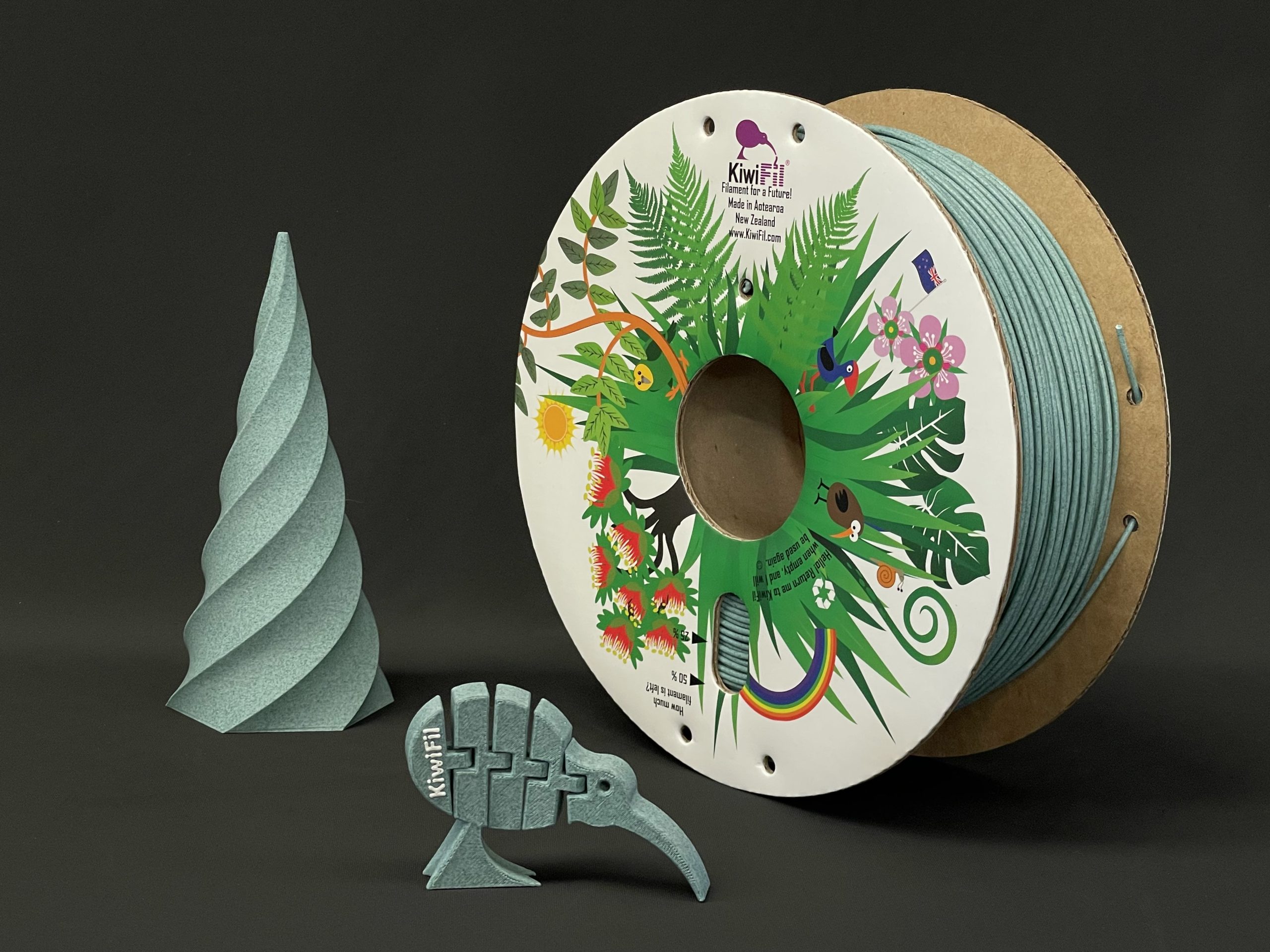
Wool Source and KiwiFil Launch WoolyFil, First Commercial Wool-Based Colour 3D Printing Filament

Materials
Originally reported by 3D Printing Industry
New Zealand ingredients manufacturer Wool Source and filament producer KiwiFil have launched WoolyFil, described as the first commercial 3D printing filament using a wool-based colourant. The filament uses Wool Source Pigments in place of synthetic or fossil-fuel-derived colour, combined with recycled PLA. WoolyFil is available in Green Marble and Riverstone colours on 500 g and 1 kg spools (1.75 mm diameter), printing at 180–200°C with a 0.4 mm nozzle and 50–60°C bed temperature. Wool Source CEO Tom Hooper stated the pigment contains 92–98% biobased carbon content, and KiwiFil director Eva Hakansson confirmed the material meets everyday printing needs for their customer base.
This launch sits within the polymer-mex (FDM/FFF) segment and targets the consumer and prosumer desktop market, where filament differentiation has increasingly moved toward material properties and sustainability claims. Wool Source’s patented technology transforms strong wool fibre into fine coloured particles at 150 µm for textured effects or 10 µm for block colours, offering a biobased alternative to masterbatch pigments. The product competes indirectly with other recycled or bio-filaments from companies like Reflow, Filamentive, and Proto-pasta, but stands out by embedding a natural fibre colourant rather than simply using recycled polymer. The collaboration also demonstrates a cross-sector pull-through: Wool Source has previously formulated its pigments into PLA, PCL, PBS, and PHA, and partnered with outdoor brand Kathmandu on screen-printed T-shirts, indicating broader material substitution intent beyond 3D printing.
For the desktop FDM/FFF market, WoolyFil is a niche material addition rather than a platform shift. The key execution question is whether the wool-based pigment can maintain colour consistency and print reliability at scale, and whether KiwiFil can expand the colour range beyond the initial two offerings without compromising the biobased carbon claim. Users evaluating this filament should test for layer adhesion and nozzle wear compared to standard PLA blends, as the wool particle loading may affect flow behaviour. The product is commercially available now, making it a concrete option for sustainability-focused makers rather than a future promise.
Topics