铖联科技 partners with West China Hospital of Stomatology, launches 铖联美卡 digital removable partial denture platform

Hardware
Originally reported by 好的牙口腔行业研究
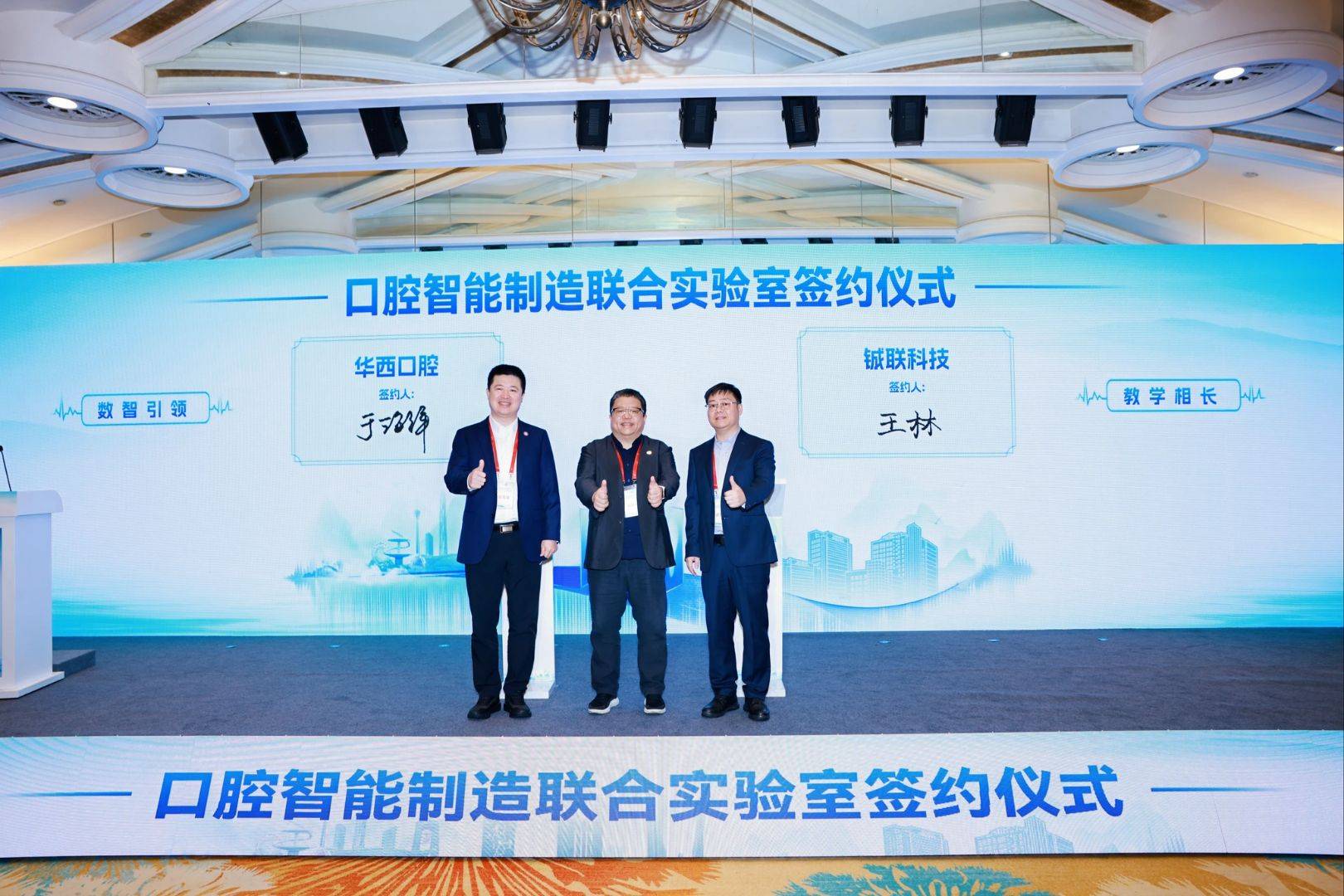
铖联科技 (Chenglian Technology) has entered a strategic partnership with the West China Hospital of Stomatology (Sichuan University) and its Oral Disease Intelligent Diagnosis and Treatment Sichuan Engineering Research Center, formalized on July 12, 2026. The collaboration establishes a joint laboratory for intelligent dental manufacturing, focusing on digital removable partial denture (RPD) technology, metal surgical guide design, and clinical translation. As the first major output, the company launched 铖联美卡 Huacai series, a new digital RPD system based on patented aesthetic clasp and metal framework technologies from Professor Yu Haiyang's team. The system integrates AI design, titanium alloy materials, and metal 3D printing to achieve what the partners describe as "super aesthetic, super tough, super lightweight" properties, addressing traditional RPD issues of visible metal, breakage, and heavy weight. A clinical adoption network called "Chengmeng Hui" was also announced, with initial partner laboratories and clinics receiving certification.
This partnership is significant because it represents a structured, clinically-anchored pathway for metal AM adoption in dental prosthetics, specifically in the removable partial denture segment - a high-volume, traditionally labor-intensive category that has lagged behind implant and fixed prosthetics in digitization. The medical-dental vertical remains the largest production-scale AM user globally, driven by Align Technology's vat photopolymerization dominance, but metal AM in dental has been largely confined to cobalt-chrome frameworks for fixed partial dentures. 铖联科技 is targeting the RPD market, which serves a large aging population in China and globally, where patient volumes are high but per-unit economics have historically favored manual casting. By combining patented clasp design, topology-optimized titanium alloy structures, and a standardized digital workflow, the company is attempting to shift RPD from a low-cost commodity to a higher-value, clinically differentiated product. The joint lab structure also mirrors the broader industry pattern of academic-clinical-industry consortia that accelerate qualification and reduce the translational gap - a critical factor in medical devices where regulatory and clinical evidence requirements are steep.
From a practical standpoint, 铖联科技's ability to scale this will depend on whether the 铖联美卡 system can demonstrate consistent clinical outcomes across multiple sites and achieve regulatory clearance in China's NMPA framework. The partnership with West China Hospital - one of China's top dental institutions - provides strong clinical credibility and a pipeline for peer-reviewed evidence, which is essential for broader adoption. For dental labs and clinicians evaluating digital RPD solutions, the key question is whether the system's per-unit cost and turnaround time can compete with conventional casting at scale, not just on aesthetics. The company's next execution milestone will be expanding the Chengmeng Hui network beyond the initial cohort and securing reimbursement pathways in China's public health insurance system, where RPD is a covered category.
Topics