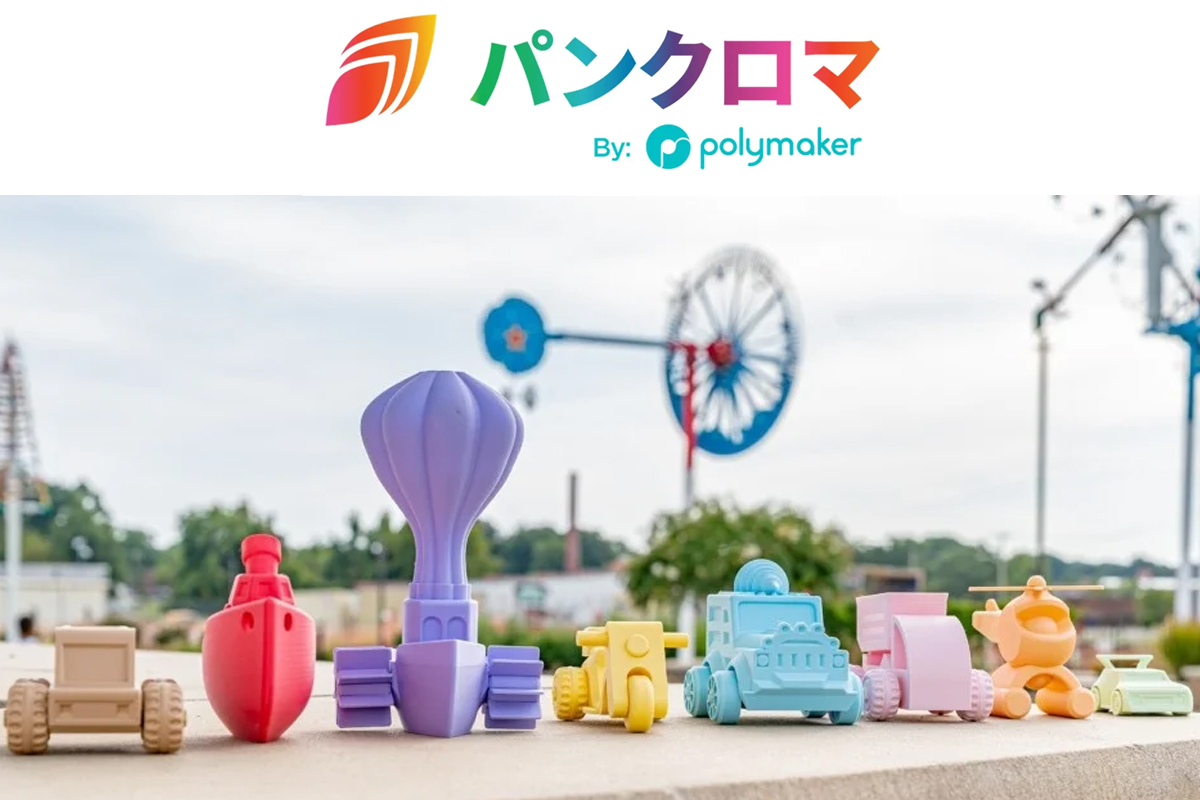
Polymaker unifies pricing for its 'Panchroma' PLA series to 3,000 yen (tax included) across all lineups

Materials
Originally reported by ShareLab
Polymaker, through its Japanese distributor Sun Stella, has unified the retail price of its entire Panchroma PLA filament series to 3,000 yen (approximately $20 USD) including tax, effective immediately. The price harmonization covers all current Panchroma PLA variants - Matte, Satin, Silk, Metallic, Marble, Dual, Gradient, and translucent Rainbow - removing previous price differentials based on color or finish. The move applies only to the Panchroma PLA lineup; the separate Panchroma CoPE filament remains at 1,800 yen, and overseas-sourced products and refill spools will follow a different pricing structure. Sun Stella, which reports annual sales of over 50,000 filament spools and 3,500 3D printers in Japan, is executing the change to simplify material selection for end users.
This pricing simplification addresses a real friction point in the consumer and prosumer polymer AM market, particularly for users of multi-color systems like Bambu Lab's AMS or Prusa's MMU. When color or material type directly changes the per-spool cost, users face a hidden tax on design experimentation - the very behavior that multi-material printing is meant to encourage. By flattening the price curve, Polymaker and Sun Stella effectively remove a psychological barrier to adoption among hobbyists and small design studios. The move also reinforces Polymaker's position in the Japanese market, where it competes with Bambu Lab's own filaments, eSun, and local brands. For a materials company, this is a rare instance of using pricing architecture as a product feature rather than a cost-pass-through mechanism.
From a practical standpoint, this is a tactical move that improves the user experience at the point of purchase but does not change the underlying economics of filament production. The real test will be whether the unified price holds as raw material costs fluctuate and whether Polymaker can extend similar simplicity to its engineering-grade materials like PolyMide PA6/PA12 or Fiberon composites. For now, Japanese users of Panchroma PLA get a cleaner buying decision - and that alone is a small but meaningful improvement in the desktop AM ecosystem.
This article is an AI-assisted rewrite of the linked source report. Facts originate from the source; phrasing is AMPulse's. Use Read Original below to verify, or Report an issue if something is wrong.