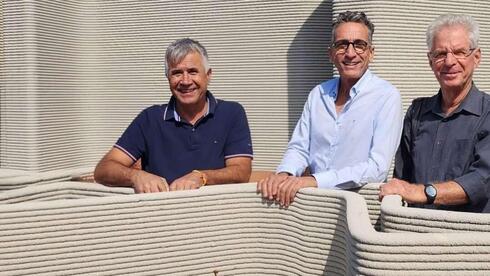
Shahaf PY raises $1.5M seed round for robotics-driven concrete 3D printing systems

Hardware
Originally reported by calcalistech.com
Israeli startup Shahaf PY has secured a $1.5 million seed investment, bringing its total funding to $2.5 million. The round, which closed on January 1, 2026, was supported by the Israel Innovation Authority and private investors. Founded in 2023 by CEO Eran Carmi, the company emerged from the development department of the veteran Shahaf Stone & Marble firm and now employs 25 people. Its core technology is a holistic robotic 3D concrete printing system that integrates proprietary AI-based software, hardware, and the use of standard local concrete mixes, eliminating the need for expensive proprietary materials.
This development matters because it targets the economically significant but media-invisible industrial tooling and construction vertical, where labor shortages and cost pressures are acute. Shahaf PY’s approach-integrating materials development, robotic hardware, and software into a full-stack solution-represents a classic pattern of a traditional manufacturing firm leveraging deep vertical expertise to localize and scale a technology. Its ability to print with standard concrete is a direct challenge to competitors reliant on closed material ecosystems, aiming to capture value across the entire construction value chain from design to on-site production. The company’s stated work with defense entities also highlights the politically accelerated adoption wave in protected sectors, where domestic, agile manufacturing capacity is increasingly valued.
From an industry perspective, the practical test for Shahaf PY will be transitioning from bespoke architectural projects and early defense prototypes to repeatable, qualified production runs. The company must demonstrate that its robotic systems can deliver not just complexity but consistent quality and documented ROI at a scale that moves beyond niche applications. For potential buyers in construction and defense, the key question is whether this integrated solution can achieve qualification and reliability that matches its ambition to enable smarter, faster building.
Topics