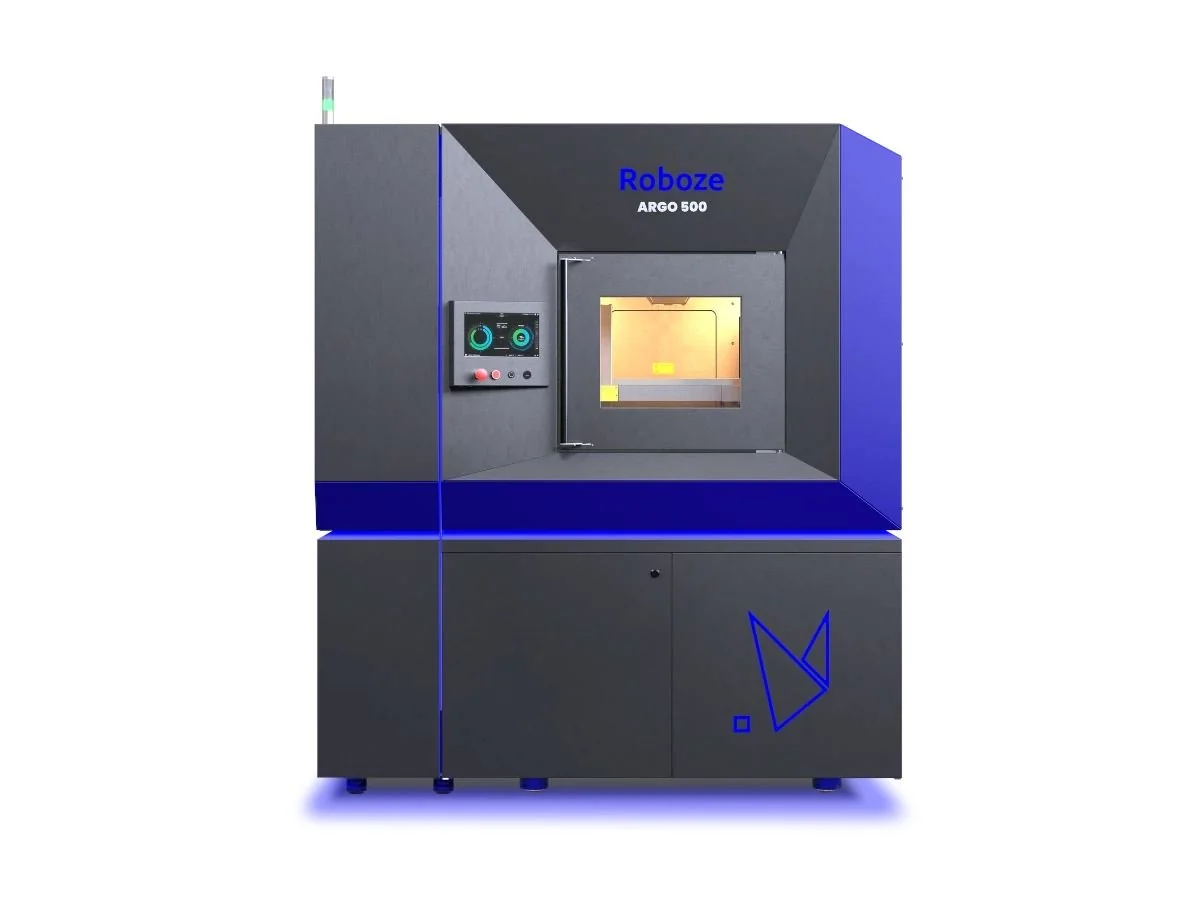
NESST Srl validates CubeSat 3U structure in Carbon PEEK on ROBOZE ARGO 500 for ISA/ESA program

Service
Originally reported by TCT Magazine
NESST Srl has designed, additively manufactured, and validated a CubeSat 3U structure under a program funded by the Italian Space Agency and the European Space Agency. The Italian aerospace manufacturing start-up produced the structural components on a ROBOZE ARGO 500 platform in Carbon PEEK via fused filament fabrication (FFF). Material characterisation and mechanical testing showed performance comparable to conventional aluminium alloys, while the polymer also met the ECSS-Q-ST-70-02C outgassing standard required for space hardware. ROBOZE supported NESST during the testing phase by locking in process parameters that kept the build within those space-industry limits.
For CubeSat structures, aluminium machining remains the default path; NESST is arguing that high-performance FFF polymers can replace that path where stiffness-to-weight, outgassing compliance, and extreme geometric customisation dominate the trade. Carbon PEEK is a known high-temperature composite filament class, but agency-backed structural validation on a 3U bus is rarer than secondary brackets or ground-support tooling. Airbus's recent qualification of the ROBOZE ARGO 500 HYPERSPEED with ULTEM 9085 for secondary structural parts strengthens the platform's aerospace pedigree, yet it sits in a different materials and load class than NESST's Carbon PEEK primary-structure claim. The practical gap is not whether a demo cell can print a bus, but whether FFF process control can hold flight-level repeatability across lots.
Technical manager Francesco Lucia frames Phase 2 around functionalising the structure - integrating harnesses, electronics, and microfluidics so additive value compounds beyond metal-to-polymer substitution. Program buyers and ESA/ISA reviewers will weight ECSS documentation, process traceability, and batch consistency more heavily than a single validated geometry. Until those packages mature into flight hardware, this remains a strong qualification milestone for NESST's polymer-structure thesis rather than a fleet production standard.
This article is an AI-assisted rewrite of the linked source report. Facts originate from the source; phrasing is AMPulse's. Use Read Original below to verify, or Report an issue if something is wrong.
Topics