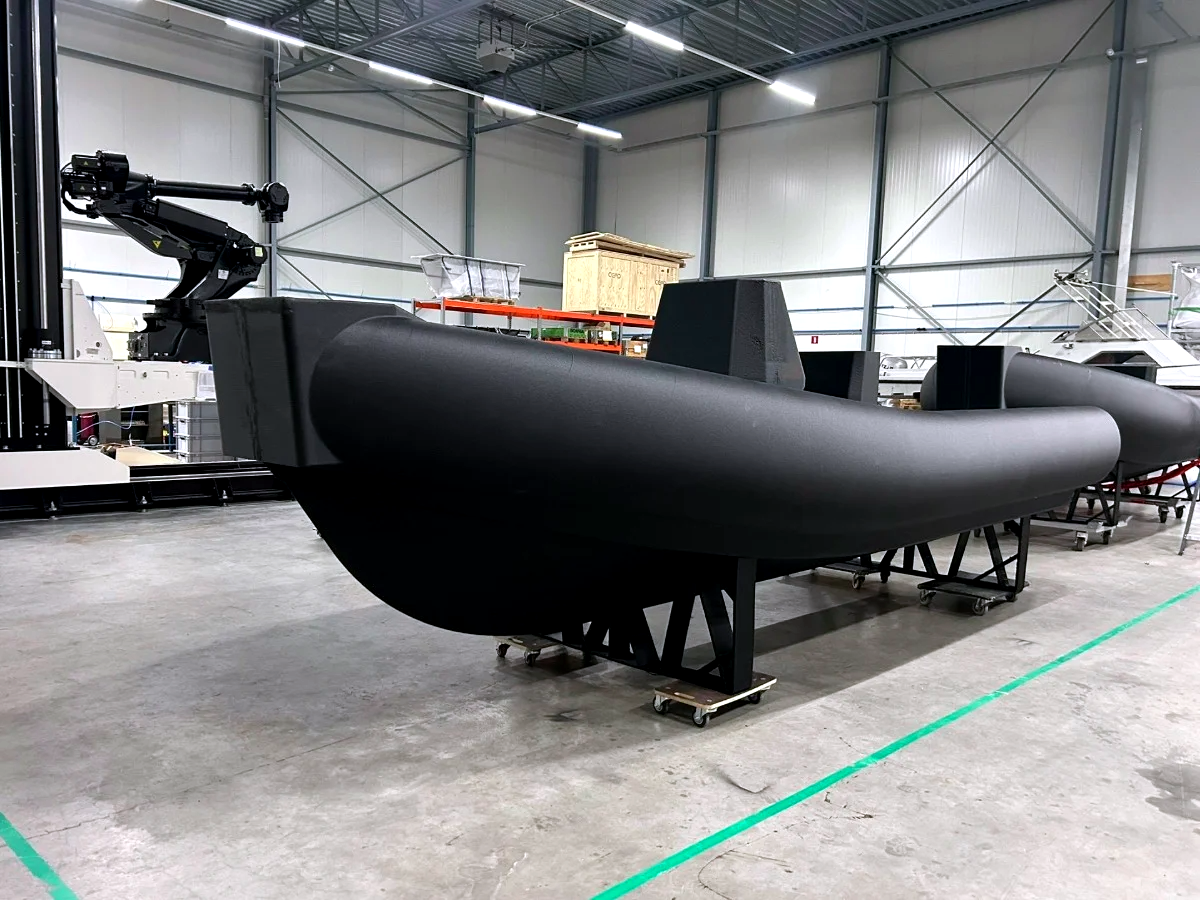
Voltage Vessels proposes 3D-printed 6-metre RHIB hull on demand to cut supply chain lead time

Materials
Originally reported by TCT Magazine
Voltage Vessels has proposed a distributed manufacturing model for rigid hull inflatable boats (RHIBs), using additive manufacturing to produce a six-metre hull on demand. The company is targeting defence applications, particularly Navy SEALs and forward-deployed forces, where supply chain lead times of weeks or months create logistical vulnerabilities. The hull is made from a composite material reinforced with basalt fibre, a material previously used by the Soviet military for armour and infrastructure. The approach aims to deliver RHIBs at the point of need, bypassing traditional supply chains entirely.
This proposal fits a recurring pattern in defence AM: the push to shift from centralised, long-lead manufacturing to distributed, on-demand production at the tactical edge. Voltage Vessels is not the first to explore large-format composite AM for marine applications, but the specific focus on RHIB hulls - a critical piece of special operations equipment - gives it a clear, high-value use case. The basalt fibre reinforcement is notable because it offers a cost-effective, domestically available alternative to carbon fibre, which is often subject to supply constraints and export controls. The real question is whether the company can move from proposal to qualified production, especially given the stringent certification requirements for military watercraft.
From a practical standpoint, the success of this approach hinges on two things: qualification of the basalt fibre composite for marine environments, and the ability to produce hulls that meet military durability and performance standards. Voltage Vessels must demonstrate that the 3D-printed hull can withstand the same loads and impacts as a conventionally manufactured one, and that the distributed manufacturing model can be scaled without sacrificing quality. For now, this remains a proposal, not a production programme, and the company will need to secure a development contract to move beyond the concept stage.
Topics