Voltage Vessels launches Eclipse X9 basalt-recycled PETG composite for LFAM

Materials
Originally reported by 3D Printing Industry
Voltage Vessels, based in Hawaii, has commercially released Eclipse X9, a composite material combining recycled PETG with basalt fiber reinforcement for large-format additive manufacturing (LFAM). Available as both pellets and filament, the material is undergoing evaluation at multiple LFAM facilities across different printer platforms. Pellet supply targets robotic extrusion systems from Caracol and CEAD, as well as gantry machines from CMS and JuggerBot, while filament is offered in 1.75 mm and 2.85 mm diameters for desktop FFF printers up to large-format units like the Elegoo OrangeStorm Giga. Independent validation by the University of Maine's Advanced Structures and Composites Center showed 108.2 MPa tensile strength, 112.98 MPa bending strength, and saltwater immersion trials over 24-26 months retaining more than 90% of strength. The material also supports closed-loop mechanical recycling, with finished parts shreddable back into pellets for reprinting.
This launch fits the recurring pattern of materials innovation targeting specific vertical pain points rather than general-purpose improvement. Voltage is positioning Eclipse X9 squarely at marine structures, tooling, buoys, unmanned surface vehicles, and infrastructure exposed to harsh coastal conditions - a niche where corrosion resistance, radio transparency, and low radar signature create a meaningful value proposition. The basalt fiber's nonconductive nature and RF transparency make defense and autonomous maritime systems natural adjacencies, aligning with the politically accelerated defense adoption wave. The material's platform-agnostic strategy - running on both robotic extrusion and gantry systems - reduces qualification friction for service bureaus and contract manufacturers, which is critical for LFAM adoption where machine lock-in remains a barrier. The closed-loop recyclability addresses the post-processing and waste concerns that often limit AM's environmental claims in production settings.
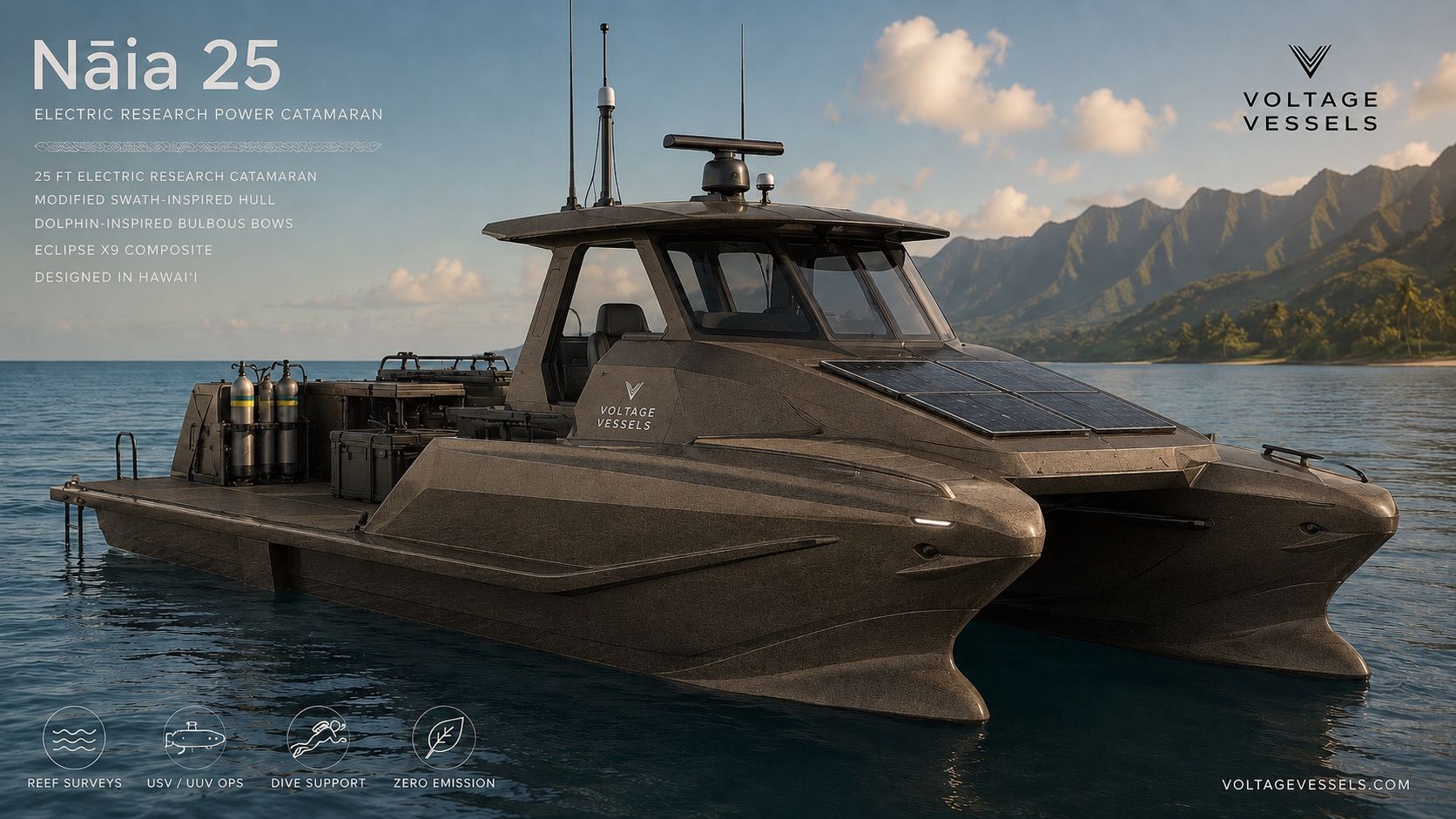
From a practical standpoint, the key execution challenge is whether Voltage can build the service infrastructure and customer references needed to move beyond sample orders into repeatable production. The Nāia 25 demonstrator catamaran remains in design phase, so the material's real-world vessel-scale performance is not yet proven. For LFAM service bureaus evaluating Eclipse X9, the independent saltwater immersion data and ASTM/ISO testing provide a credible starting point, but the next step is validating bead consistency and surface quality across different printer platforms at production throughput. The color development work for marine service - naval gray, bronze sand, and lighter heat-limiting shades - suggests Voltage understands the aesthetic and thermal requirements of the target market, but execution discipline will determine whether this becomes a reference material or a footnote.
This article is an AI-assisted rewrite of the linked source report. Facts originate from the source; phrasing is AMPulse's. Use Read Original below to verify, or Report an issue if something is wrong.
Topics