 ×
×

From Legacy Spare Parts to On-Demand Availability
How OEM-controlled digital inventory, qualified manufacturing networks and certification pathways can make genuine maritime and energy parts available when needed.
Maritime and energy assets often remain in operation for decades. As systems age, spare parts portfolios become harder to support through traditional supply chains, especially when demand is low-volume, sporadic, and geographically distributed. For OEMs, the issue is not only operational availability. It is also about maintaining genuine part supply, protecting IP and quality, and avoiding demand leakage into non-genuine or grey-market channels.
This interview-led article brings together two perspectives. Petter Bellamy, Business Development Manager at Pelagus, explains the operational model and use cases. Wenjin Wu, PhD, Principal Engineer at the ABS Singapore Innovation Research Center, outlines the certification and classification society considerations. AMPulse frames the discussion within the broader shift of additive manufacturing toward practical industrial adoption.

PELAGUS PERSPECTIVE
Q1What makes legacy spare parts such a persistent challenge in maritime and energy?
Maritime and energy assets have long operating lives, and many vessels, engines, and systems remain in service well beyond their original design lifecycles. As these assets age, demand for specific parts becomes lower in volume and more sporadic. Traditional manufacturing and supply chain models were not designed for this pattern. Minimum order quantities, long production cycles, and geographically dispersed demand can make conventional spare parts support slow and expensive.
Q2Why is this not only a supply chain issue, but also an OEM control and grey-market issue?
When a genuine part is not available within the required operational window, end users may look for alternative sources. That creates risk for OEMs: potential loss of part sales, weaker customer relationships, and demand shifting toward non-genuine or grey-market channels. The issue is therefore not only about lead time. It is also about preserving OEM control over specifications, design authority, IP, quality, and approval.
Q3How does Pelagus convert legacy parts into secure, production-ready digital inventory?
Pelagus works with OEMs and IP owners to transform legacy documentation into validated digital inventory. Legacy 2D drawings are converted into fully defined 3D CAD models, with relevant manufacturing documentation, post-processing requirements, material specifications, tolerances, inspection criteria, and quality checks embedded in the technical record. The part is digitised once, held securely under OEM control, and manufactured only when demand exists. Pelagus' network includes 80+ qualified partners across 126 operational sites, supporting both conventional and additive manufacturing technologies.
Q4What does the technical workflow look like from drawing to delivered part?
The workflow begins with OEM documentation or legacy drawings. Pelagus converts and validates the digital model, then determines the appropriate manufacturing route based on geometry, material, volume, and lead-time requirements. The selected process may be CNC machining, casting, LPBF, WAAM, LMD, or another suitable route. In many cases, the objective is to reproduce the part according to genuine maker specifications. Redesign is considered where it solves a clear operational, performance, installation, or lead-time problem.
When a part is needed, Pelagus matches the requirements to a qualified supplier with the relevant equipment, certifications, and quality management capability. The supplier receives a controlled technical package, including CAD model, material specification, dimensional tolerances, surface finish requirements, testing requirements, and any applicable classification or regulatory standards. Pelagus maintains production oversight, captures quality records, and coordinates logistics so the part and documentation reach the customer together.
Q5Which use cases best show the practical value of this model?
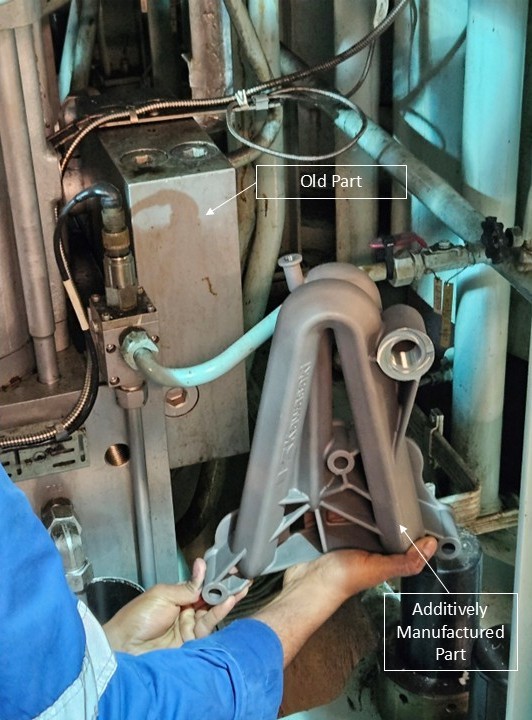
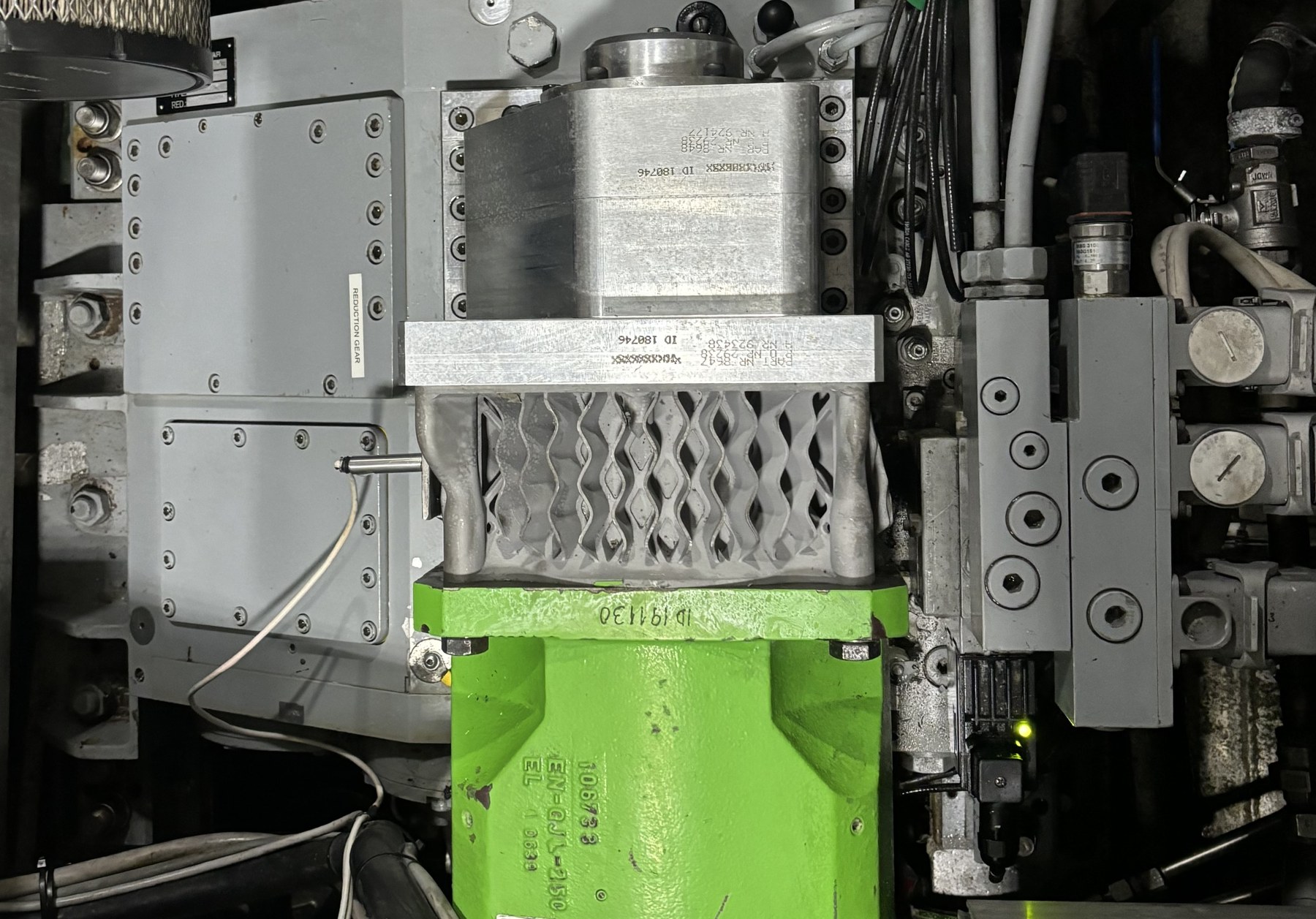
Two examples illustrate the practical value of this model. First, the Kawasaki Heavy Industries return oil standpipe project: Pelagus redesigned the part using laser powder bed fusion in 316L stainless steel. The conventionally manufactured part comprised 10 components, weighed 75 kg, required crane installation, and had a lead time of up to 135 days. The redesigned version is a single unit, weighs 7.5 kg, can be installed without a crane, and was delivered in 15 days. Second, the Servogear motor cooling flange: Pelagus redesigned an aluminium flange using LPBF, integrating passive cooling fins to address overheating in an electric motor during high-demand operation. The component was approximately 70% lighter than the original and delivered within three weeks. Both examples illustrate the broader model: the OEM retains control of IP and quality, lead time is reduced, and performance is equal to or better than the original.
ABS PERSPECTIVE
Q6From ABS' perspective, what are the key certification and qualification considerations?
Safety and demonstration of intended functions are the starting points. For AM or on-demand manufactured parts to be accepted in maritime applications, the industry needs confidence that the part can meet mechanical and functional requirements equivalent to parts manufactured by conventional methods. ABS' role is to provide a robust certification framework, including requirements for parts, facilities, testing, and qualification.
At the same time, additive manufacturing creates new opportunities because process data can be captured during production. ABS is exploring how data-driven models, simulation, and digital validation can help streamline qualification while maintaining safety and reliability. Digital file transfer also introduces cybersecurity considerations, so management of digital part data and verification of authenticity remain important.
Q7How does the ABS-Pelagus collaboration help streamline adoption?
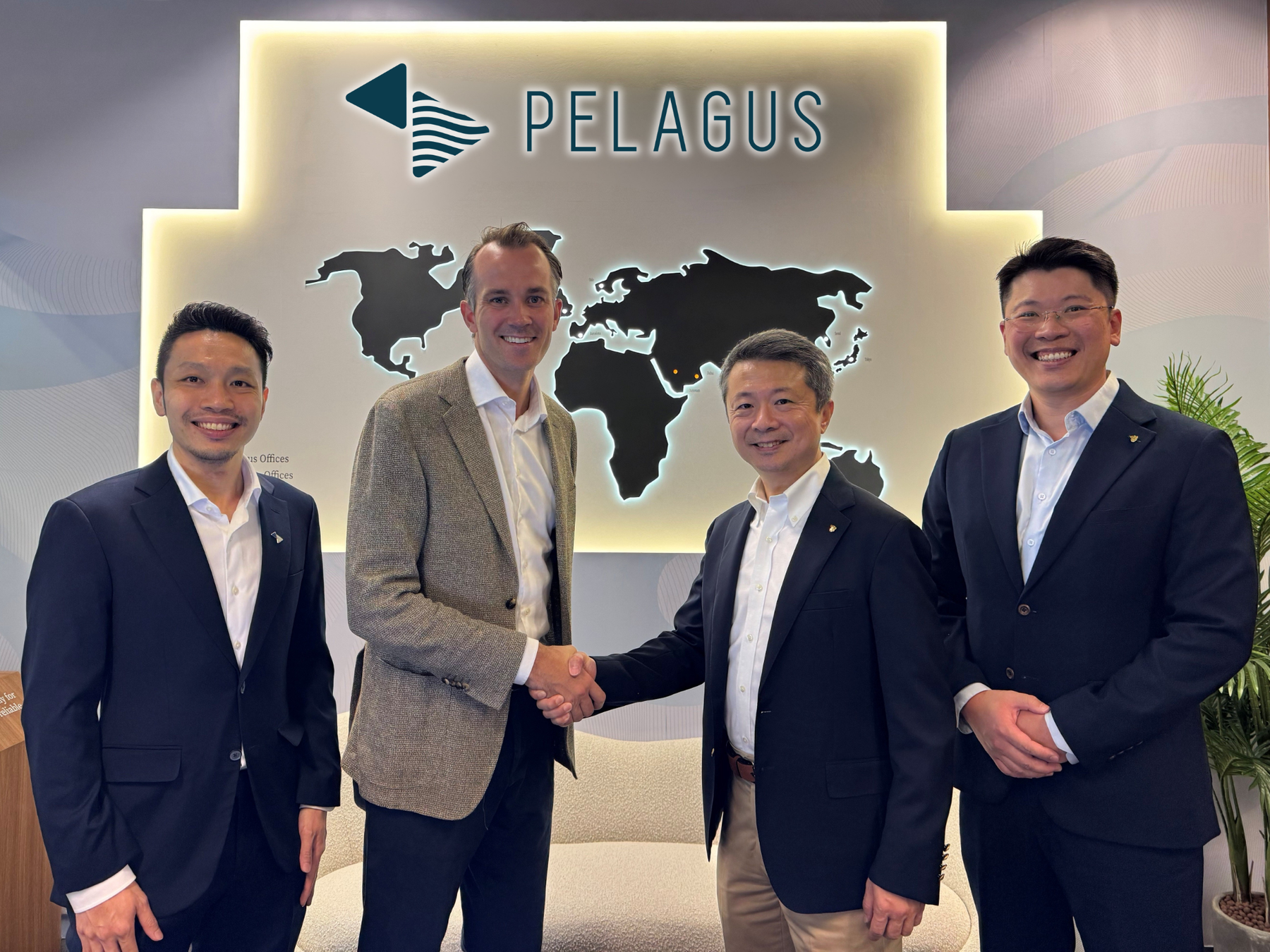
ABS is working with Pelagus to help advance on-demand AM spare parts from individual use cases into a more scalable and trusted model. The 2023 MoU focuses on advancing on-demand AM for marine and offshore spare parts, including incorporation of ABS testing requirements through the Pelagus platform, qualification of AM manufacturers, continued development of industry guidelines and standards, and streamlining of AM part certification.
JIP Phase 3 builds on this direction by focusing on the digital inventory of qualified AM parts, OEM and end-user collaboration, data-driven certification procedures, and refinement of supplier certification requirements for critical components. A practical goal is to make documentation, inspection, testing, and certification requirements integrate coherently within the on-demand manufacturing workflow.
SCALING THE MODEL
Q8What needs to happen for maritime AM and on-demand manufacturing to scale beyond individual use cases?
Scaling does not mean 3D printing every spare part. It means identifying the right parts, validating the technical package, maintaining OEM control, selecting qualified suppliers, and helping ensure certification, traceability, cybersecurity, and logistics are embedded in the process. Maritime and energy are strong application areas because assets are long-lived, parts demand is uneven, and downtime can be costly.
The path forward is not technology promotion for its own sake, but a practical operating model where additive and conventional manufacturing are used where they make sense. Collaboration between OEMs, platform operators, manufacturing partners, classification societies, and end users is essential to make the model repeatable and trusted.
Closing analysis
These examples suggest that the practical value of additive manufacturing in maritime and energy is not novelty. The value is controlled availability: reducing lead times, supporting low-volume demand, improving performance where redesign makes sense, and connecting digital inventory to qualified production and certification workflows.
For the broader AM industry, this is the shift that matters: from demonstrating what the technology can do to showing where it can reliably solve operational problems under industrial governance.
THE WIDER LANDSCAPE
Pelagus is one node in a fast-forming category. Across AMPulse's index of roughly 5,950 additive manufacturing companies, more than 700 now reference some form of on-demand or distributed manufacturing model, and close to 500 cite certification or qualification as part of their offering. Yet the overlap this article is really about, a genuine maritime, energy or offshore focus combined with an on-demand digital-inventory model, narrows to only a couple of dozen companies, the segment Pelagus operates in alongside active platforms such as Replique, Immensa and Dimanex.
The process mix reinforces Bellamy's point that scaling is not about printing everything. Of roughly 1,300 metal AM companies indexed, powder bed fusion remains the most common capability, while wire-arc and directed-energy deposition, the routes suited to larger or higher-deposition parts, remain a specialist minority. The Kawasaki standpipe and Servogear flange were laser powder bed fusion jobs for a reason: the process is chosen to fit the part, not the reverse.
The data and the interviews point the same way. The technology base is broad and the platform layer is filling in quickly. The scarce, decisive ingredient is the certification and qualification pathway that turns a printable part into an accepted genuine part. That, not printer capacity, is where maritime and energy additive manufacturing will be won.
COMPANIES REFERENCED FURTHER READINGStay Updated
Get the latest additive manufacturing (AM) market insights, company updates, and analysis directly in your inbox.
By subscribing, you agree to receive AMPulse emails and to our Privacy Policy. Unsubscribe any time.