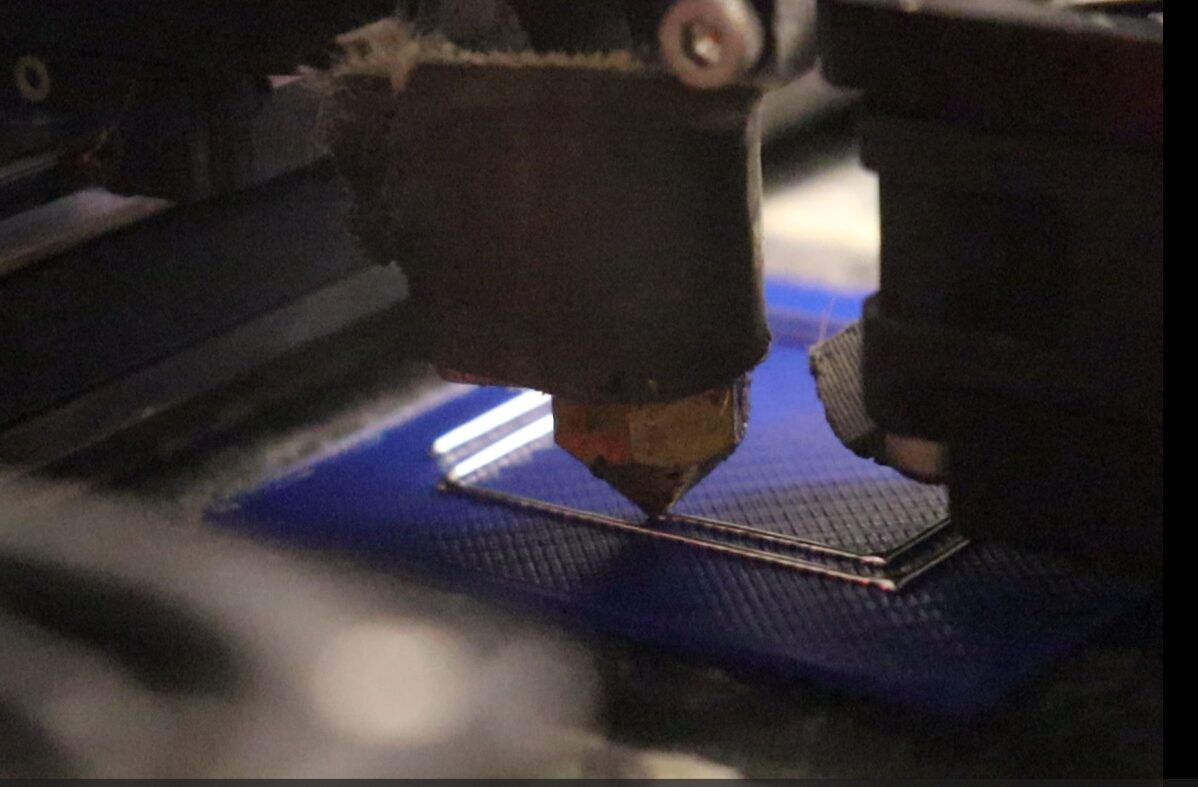
Kupros launches Cu29 conductive metal filament for FDM/FFF, targeting defense and aerospace embedded electronics

Materials
Originally reported by 3Druck
Kupros, a US deep-tech startup founded by a disabled veteran, has introduced Cu29, a fully metallic, electrically conductive filament for standard FDM/FFF 3D printers. The material enables direct printing of conductive traces, circuits, antennas, sensors, and shielding into polymer structural parts without post-processing. Cu29 is now in pilot production and is being evaluated by NASA, Northrop Grumman, Boeing, KBR, US Army labs, Los Alamos National Laboratory, and Johns Hopkins APL. The technology originated from research tied to the US Department of Defense and was commercialized through the National Security Innovation Network's startup program.
This development addresses a persistent gap in additive manufacturing: the inability to integrate electronics directly into 3D-printed parts without secondary assembly. Most conductive filaments on the market are polymer-based composites with limited conductivity, suitable only for low-power applications. Kupros claims Cu29 is fully metallic, offering significantly higher electrical performance. The company is positioning itself at the intersection of materials science and embedded electronics, a space that has seen limited commercial traction despite years of academic interest. The involvement of defense and aerospace primes suggests the technology is being evaluated for weight reduction, supply chain speed, and design freedom in mission-critical applications.
For Kupros, the immediate challenge is moving from pilot production to repeatable, qualified manufacturing. The company must develop robust design guidelines, printer profiles, and test data to overcome market skepticism left by earlier conductive filaments. Early adoption by government labs and primes provides credibility, but scaling to industrial production will require demonstrating consistency across multiple printer platforms and environments. The company's participation in multiple government-funded R&D projects on 3D-printed electronics and embedded antennas indicates a deliberate, qualification-driven approach rather than a premature push for volume sales.
This article is an AI-assisted rewrite of the linked source report. Facts originate from the source; phrasing is AMPulse's. Use Read Original below to verify, or Report an issue if something is wrong.